
You're in a trade.
You give it room to 'breathe' because you missed out on profits on the last trade using a type of trailing risk management.
But this time, after initially going your way, price retreats beyond your initial entry price. That room to breathe turns to a trade that hits your stop and you're out for a loss.
You've been told you're doing the right thing managing risk by limiting your loss to 'x' dollars/% of account. Yet 'doing the right thing' is doing nothing but bleeding out your balance.
Well, that's not how you manage risk. How you manage risk is knowing the precise location of where to enter which does two things:
You can increase the size of your trade without increasing what you risk financially, but now your payout is 5-10-15 times more—as you'll see in a moment.
You'll have more winning trades because by trading larger size, price doesn't need to travel as far to make your payout worthwhile. And because the expectancy of price continuing to move your way diminishes the further it moves, you're capturing profits while probability is still in your favour.
Remember:
Several times a week, there are worthwhile payouts.
Once or twice a month are monster payers.
In between times is the bulk of trades which are nothing to write home about—where not giving back winnings is crucial.
Right locations in practice
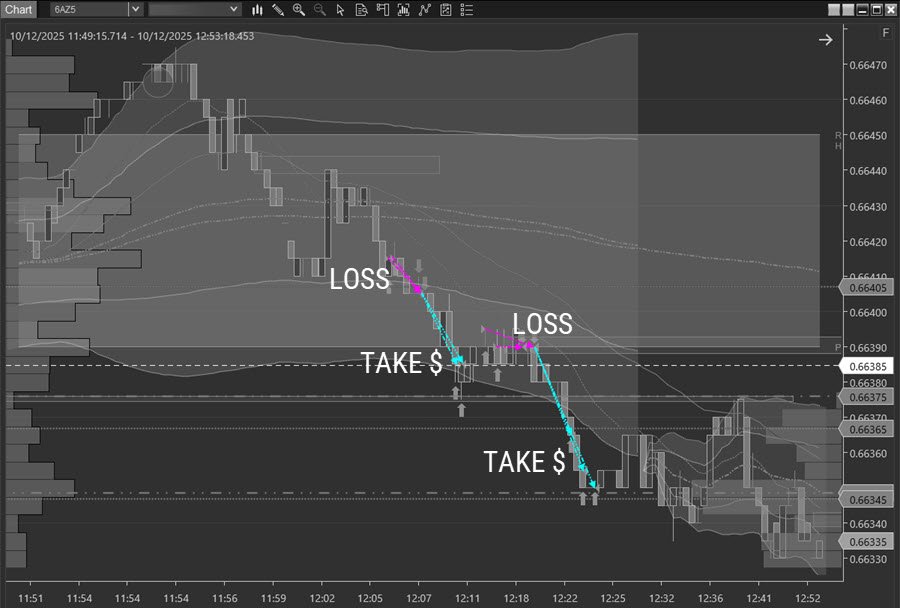
Morning session: Two losses but profitable overall.
That's what happens when location is correct—even when the trade fails, you're out with minimal damage.
Live footage of these trades is linked at the end.
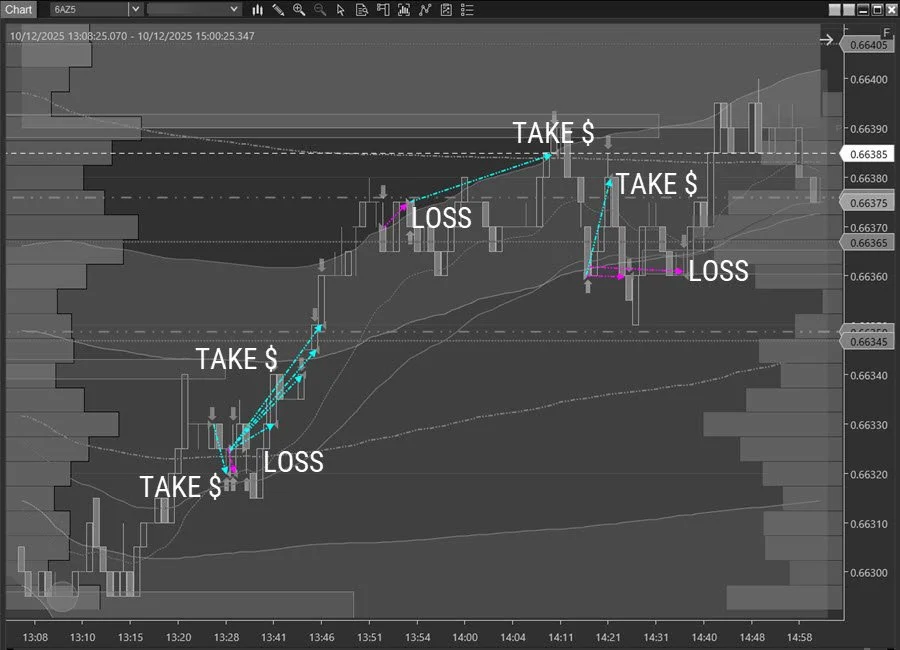
Afternoon session:
Evening session:
Unforced errors and larger losses happen. Hence the necessity for paper cuts to avoid the dreaded win some, lose more.
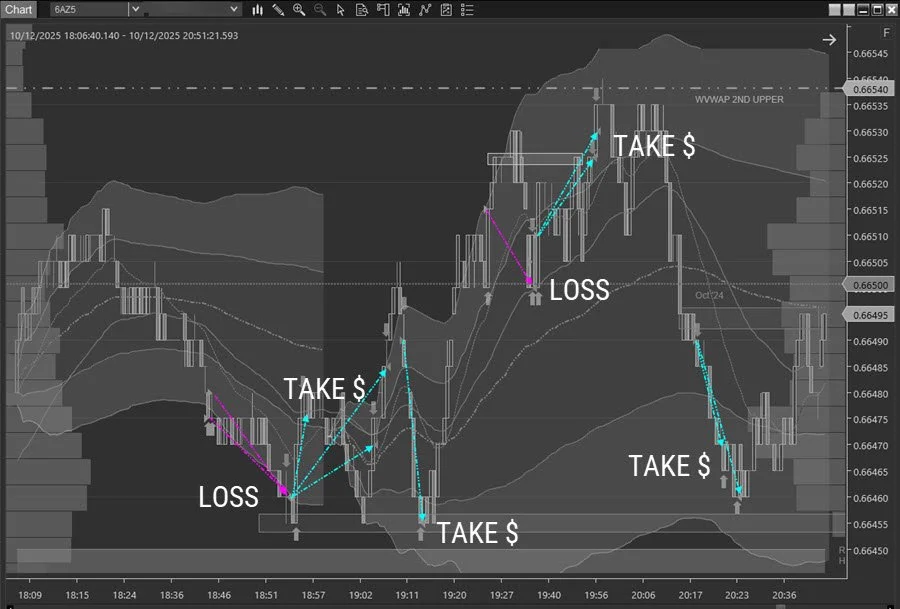
Wrong location and those losses wipe out multiple winners.
Right location and you can take two, three, four paper cut losses and still walk away profitable because they're not killing your winners.
My first live trading exercise at a professional firm:
Risk 1 point to make 1 point.
Sounds insane. But here's why it worked:
The exercise wasn't about making money. It was about entering at precisely the right location so the trade moved onside immediately. Meaning: price never traded worse than your entry.
And rather than waste time in a 'winning trade', exit and repeat it. Lose a point? Exit and try again. Rinse and repeat, rinse and repeat—because repetition is how you get really good at it.
The sizing error
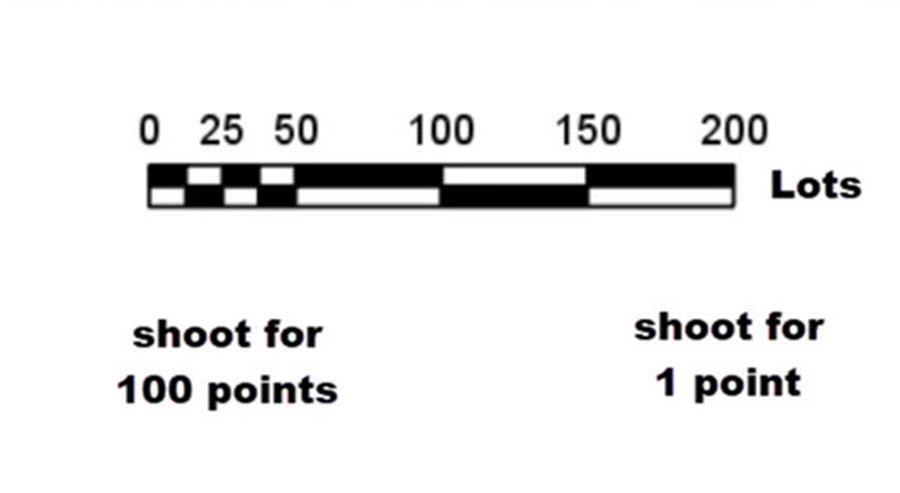
Most traders operate on the left—trading just a handful of lots, hoping for big moves. Professionals operate on the right—trading 20, 40 and more lots, capturing more frequent opportunities.
Why? Because when you enter at the precise location, you can trade 20 lots instead of 2.
The market only needs to move a fraction of what you're currently targeting to pay you meaningfully. And because these moves happen far more often, you get paid more often.
There's another advantage here. When you can scale size like this, you can vary your position size based on odds—like poker players do with their hand strength.
You won't trade your maximum lots every time. But having that option means you can go much bigger on your best-odds trades. That's what the best traders do. But that's a topic for another day.
How Do You Know Where the Precise Location Is?
All the trades above use the same trading framework and playbook.
The framework gives you principles that govern areas to trade and not trade—and where influential participants will take prices to both complete their business and ensure speculators are constantly forced to exit trades for losses.
A playbook gives you numerous trades, each matching a different way price behaves so you can enter at precisely the right time regardless of market conditions.
You avoid unnecessary heat and exit at the right time to avoid giving back profits or getting out too soon.
Most traders don't realise the whole purpose of having an effective framework and playbook of trades is that it's repeatable. Because what you repeat you can get really good at.
You don't need to be the best trader.
You just need to know the game and have a repeatable approach you can implement to be on the other side of those who don't.
This is what it looks like - live footage of the morning session trades.