
The antidote to trading anxiety: a 15-second example
The first loss below was 15 seconds between entering and exiting.
Anxiety while trading creates a lot of noise at the back of the brain that gets in the way of thinking clearly.
The chart shows the outcome and duration of an unforced error, followed by two playbook trades.
The chart isn't time-based. It uses proprietary brick-style bars and a proprietary indicator that provides supporting evidence to fade the market at 'Predictable Efficiency' price levels.

Now imagine you don't have a playbook of ultra-specific trades.
Faced with a similar scenario, what's most likely to happen at the 16 second mark is that instead of instantly recognising your error, you're surprised and unprepared, because the market doesn't stop at the 16 second mark. It keeps going.
In under 40 seconds you're now in a drawdown three times larger than at the 15 second mark.
This type of situation causes your anxiety to spike and it makes clear decision-making harder and any decision slow to reach.
But with ultra-specific trades you know the behaviours of, you notice your error quickly and can act. There's no spike in anxiety, because when you've got a small universe of playbook trades you're always repeating, your awareness of making any error is fast.
While someone is making lots and lots of trades, you're making the same few trades lots and lots of times. And because none of us are perfect, all those repetitions include making mistakes. So you're well-prepared to deal with them moving forward - much like the quick exit in the chart.
Operating without that anxious noise, you can tell one type of specific trade and scenario from another and move rapidly to reduce the impact, and move forward with capturing the next reward.
In that first loss, I'd overlooked a rule of thumb that disqualifies fading the market. That rule of thumb not to fade is actually the behaviour of a specific playbook trade, the one labelled Tram-Tracks on the chart. Recognising the error for what it was, I reversed the short into a Tram-Tracks long.
The reversal trade, which lasted 17 seconds, paid back USD 226.50 of the USD 429.50 loss. Then a 1 minute and 9 second trade for USD 734.10 net more than recovered the earlier impact of the error.
But if you're not seeing the market in terms of specific scenarios of opportunity, ones you recognise instantly and can act on decisively, including limiting the impact of an error, then you simply can't make quick, effective decisions. The anxiety that comes with not seeing the market this way is the noise getting in the way of your thinking.
We can't eradicate mistakes or trades which move suddenly against you. But managing them doesn't have to feel like you've not got control of the situation. Legitimate antidotes exist in the method you use to trade, rather than in 'off the shelf' fixes for what you might feel is a lack of discipline or a problem with your psychology.
Knowing there is only one course of action means no deliberating on what to do while precious seconds pass by. Instead you're looking for clues another playbook trade is showing up.
Update, 9 October
I lost on 4 of my first 5 trades today. If anything is likely to spike someone's anxiety, it's the inevitable run of losers.
What you'll see is how dynamic sizing reduces their impact on your mental state. I'll cover why in a moment.
First, here's a simple heuristic for starting your trading day.
Ask yourself, do you want to be a buyer or a seller?
And to answer, forget about lines on charts, and technical analysis. This is an auction, no different to one for houses, commodities or anything else, so look at it as objectively as you would in business.
You simply want to know whether today's price is for buying or for selling, or perhaps neither.
What's your answer?
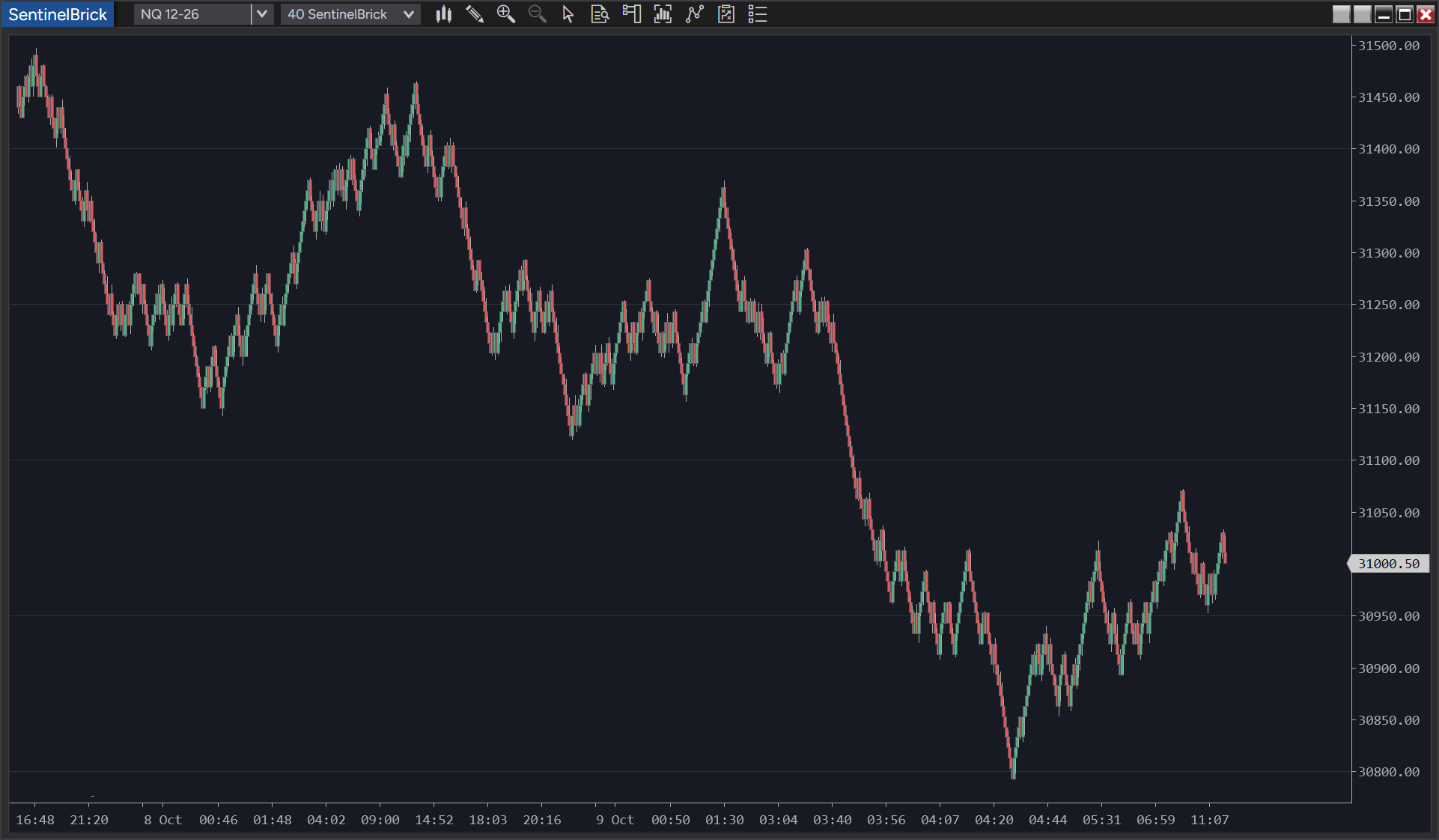
There are going to be mixed responses, but the correct answer is you want to be a buyer.
That doesn't mean just go and enter long right now, nor does it mean no entering short trades.
But it does mean, until proven otherwise, the focus will be on a long opportunity.
A primary long trade will require a catalyst, and I already know which playbook trade it's likely to involve.
In the meantime, I will err on the side of smaller size for shorts than for longs. And larger size is for a specific scenario, as you'll see.
It all comes back to knowing your data.
Below are the executions.
Far from perfect trading during the light liquidity period, but that doesn't mean you can't ask Mr Market, "Okay if I start again?"
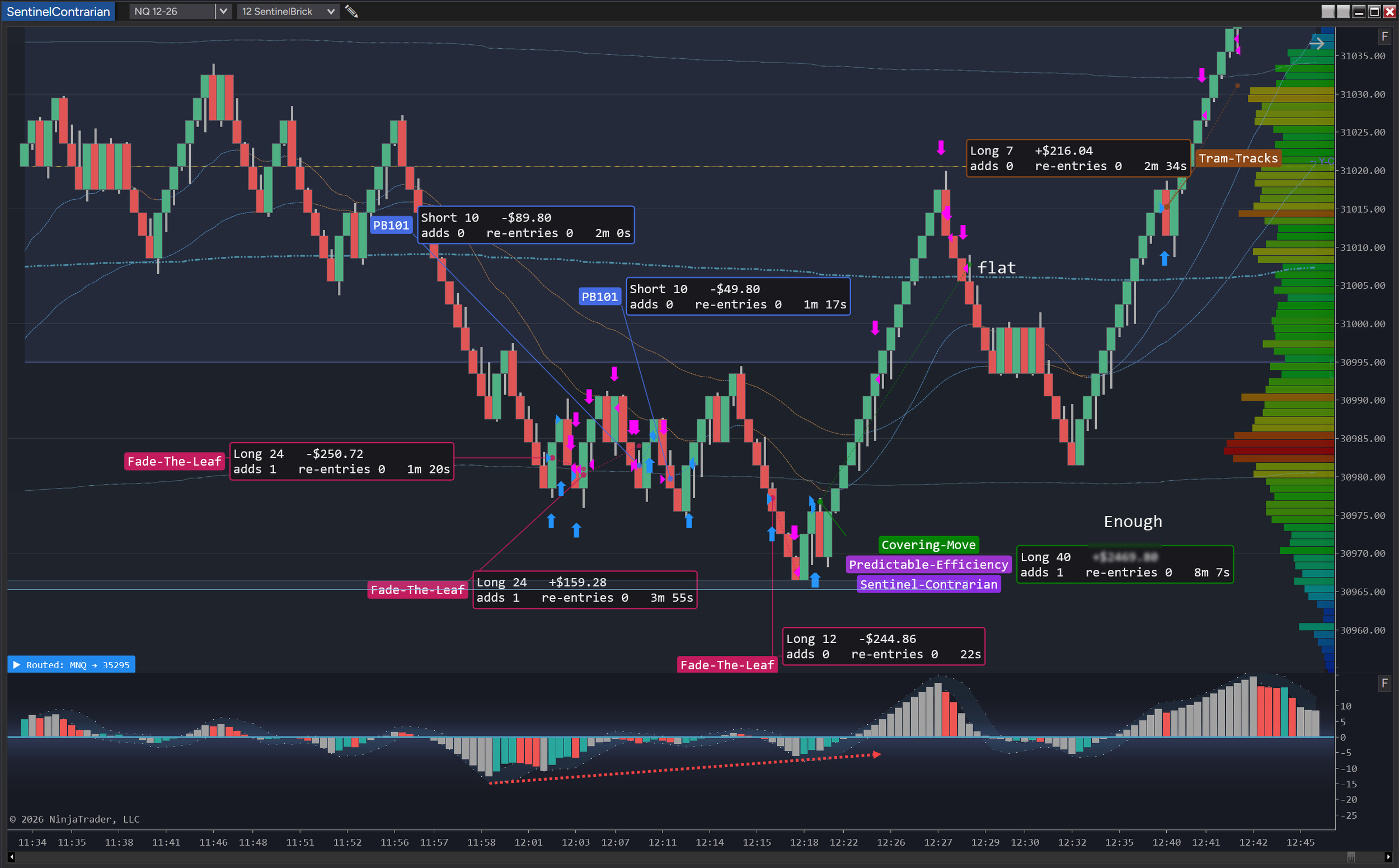
Eventually everything turned out fine because of the trade that made 'enough'. You can see the variation in trade size in the chart: smaller on the shorts than on the Fade-The-Leaf longs, and largest on the trade where three playbook trades showed up at the same time.
I didn't know it was coming on the 6th trade. I just know that by focusing on a group of trades I've taken over and over, I know what happens over a reasonable number of trades.
This is why frustration doesn't turn into trading on tilt, and why I'm not getting overly anxious about what feels, in the moment, like losing on every trade.
If you're simply taking lots and lots of different trades, it's not possible to develop an awareness of what your future performance is going to look like. I don't mean in terms of the exact dollars and cents - how far larger winners run is always an unknown.
But what you can be sure of is how many errors you're likely to make, how many trades will pay far more than a group of losers, which trades pay out the most and so on. So at no stage are you ever worried about where things are heading.
There's nothing more comfortable than just entering one playbook trade after another, adjusting sizing accordingly. Even making some sloppy entries and exits isn't enough to kill the positive expectancy.
This isn't about having nerves of steel whenever losing trades are coming more often than winning trades. It comes down to experiencing playbook trade after playbook trade, within a framework that has positive expectancy. It's the internal change that comes only from doing it. And that means having the know-how, but also the competence to execute on it. And because it takes repetition to iron out the errors, that repetition is at the same time changing your belief about what it is to experience a loser.