
Where trading traps start
They start here.
I've been developing new tools, which means pulling apart how others have coded the same logic. The same problem keeps appearing.
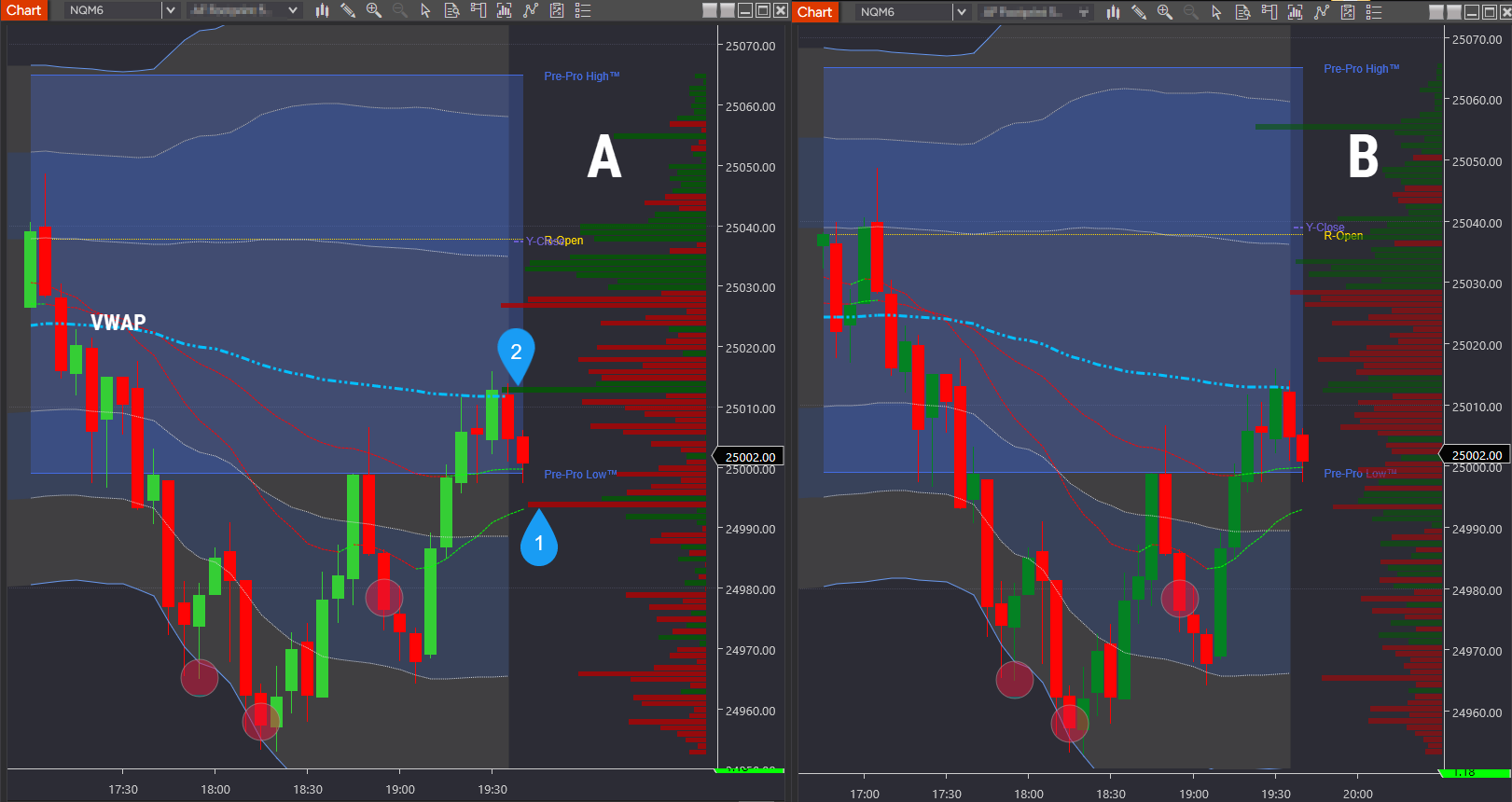
Two versions of the same delta logic. I went through the code meticulously. The difference between them is tiny. The outcome difference isn't.
The left produces noticeably larger bars at the same moments in the session. At a quick glance there's no meaningful difference. Look closely and one of them is working against you.
Your tools determine what you see
A lot of traders are running tools that seem fine yet are full of flaws in how they calculate end user data.
Software ran north of $1,000 a month when I was trading on behalf of clients, and more again trading futures at a specialised firm. Both were excessive for independent trading.
But $15,600 a year is still thousands of percent more than what sits at the budget end. Some of those tools are being used to make decisions on hundreds of thousands of dollars. Risky tools to manage risk.
I'm not suggesting every trader needs to develop their own tools. But glitches like this pay me. This is poker.
No single observation is enough. Combine multiple points of evidence and the odds move in your favour.
From the same session
At Point 1, one red horizontal bar stands out. It extends significantly further left than every other bar around it displaying aggressive selling is concentrated at that level. It doesn't appear like that in B.
The accurate data shows what the chart, opinion, and what you want to happen don't.
At Point 2, price is touching VWAP. Look just below the VWAP label earlier in the session. The same failed attempts to move above it multiple times. The dash-dotted line tells you price has failed to get back above it again.
Without knowing the existence of Pre-Pro-Low™, the outsized group of sellers at point 1, and the outsized group of buyers at point 2: numerous traders conclude the market is a short.
"Trend's been down, another failure at VWAP, I'm going short".
You act because you feel you've got this. When the market shows you something different and you don't know why it's failing, trading just became the same struggle all over again.
There's one more layer. Only traders who've worked alongside me have the additional evidence that VWAP as a downside anchor is already outdated before the trade begins. I use "likely" intentionally, which will become apparent in a moment.
Yet even without the full picture, the evidence against the short was already there. But add "I want to make money" and weak rationale becomes enough. Shorts entered, yet this is what was actually happening.
That large group of buyers has spent hours in a trade that's been against them. The usual response is to promise yourself that if price gets back to break-even, you'll exit. Some break that promise when it does get back, flip to "I knew I was right" and hold.
Experienced traders, particularly those who can influence price movement, know this and take advantage of it. But not this time.
Those offside longs aren't exiting. They're holding firm. The market can't break below Pre-Pro-Low™ having tried multiple times over roughly half an hour.
This is what traders who see the full picture hold in their head at once.
You've got a large group of sellers at point 1 who are now offside. On top of that, the trade detection markers at lower prices tell you there are large groups of aggressive sellers who are now also underwater. It's reasonable to assume that there are considerably more sellers offside than buyers at point 2, and those buyers aren't moving.
You might wish you had a crystal ball. You get pretty close using multiple points of evidence.
Chess players call this a zugzwang. Every move the shorts make worsens their position.
The weight of the evidence pointed only one way. The market rose sharply higher from here.
Traders running tools coded like B never saw the full picture. And those who didn't have the additional data walked away with a conclusion built on the same thin evidence they arrived with.
Trading attracts far fewer people than it should. It's far more than speculation, it's a puzzle of decoding other people's mistakes.