You don't lose your account on bad trades. You lose it on good ones.
Just as '7-figure' traders recently reached new equity highs, betting bigger and bigger, they've got their largest amounts at risk while simultaneously getting torched.
When I was trading across multiple asset classes for wholesale clients, I shared a desk with a large group of brokers, traders, and advisers.
Having experienced a significant run-up in stock prices on the back of the Australian mining boom and global market appreciation, I was about to trade through what's now the infamous GFC.
Once volatility spiked - like it's doing right now - fund after fund, retail trader after retail trader, broking and wealth management businesses completely imploded.
Those multiple years of growth led to consistent wins, which in turn reinforced confidence, ultimately leading to bigger bets.
Everyone intellectually knows markets can change and that increased size and leverage leads to much larger losses. It's not a risk people truly consider until they've experienced it emotionally.
Take silver
In January alone the iShares Silver Trust ETF traded from about $65 to $110 and back down to just under $70. All in one month.
Many tried to pick the top entering short - getting decimated by short-covering rallies.
And then in a single trading session the price dropped from $116 to just under $70.
If you were long from above $70 - including 'adding along the way' - that move tore limbs off you.
There's a lesson and warning here I'll cover shortly.
It's not just silver that caught-out traders. Bitcoin and Ethereum. Ouch. Big-name tech and software stocks - plenty of bloodbath stories.
The right angle here isn't "what's changed?" - it's what's always been true.
Consider this
Some talk about their gains. Then there are wise heads who don't care about that because they know all that matters is how much you keep.
It all depends on how effectively your trading method keeps you out of the wealth-destroying environments.
The footage below is a quick scan of my trading workspace.
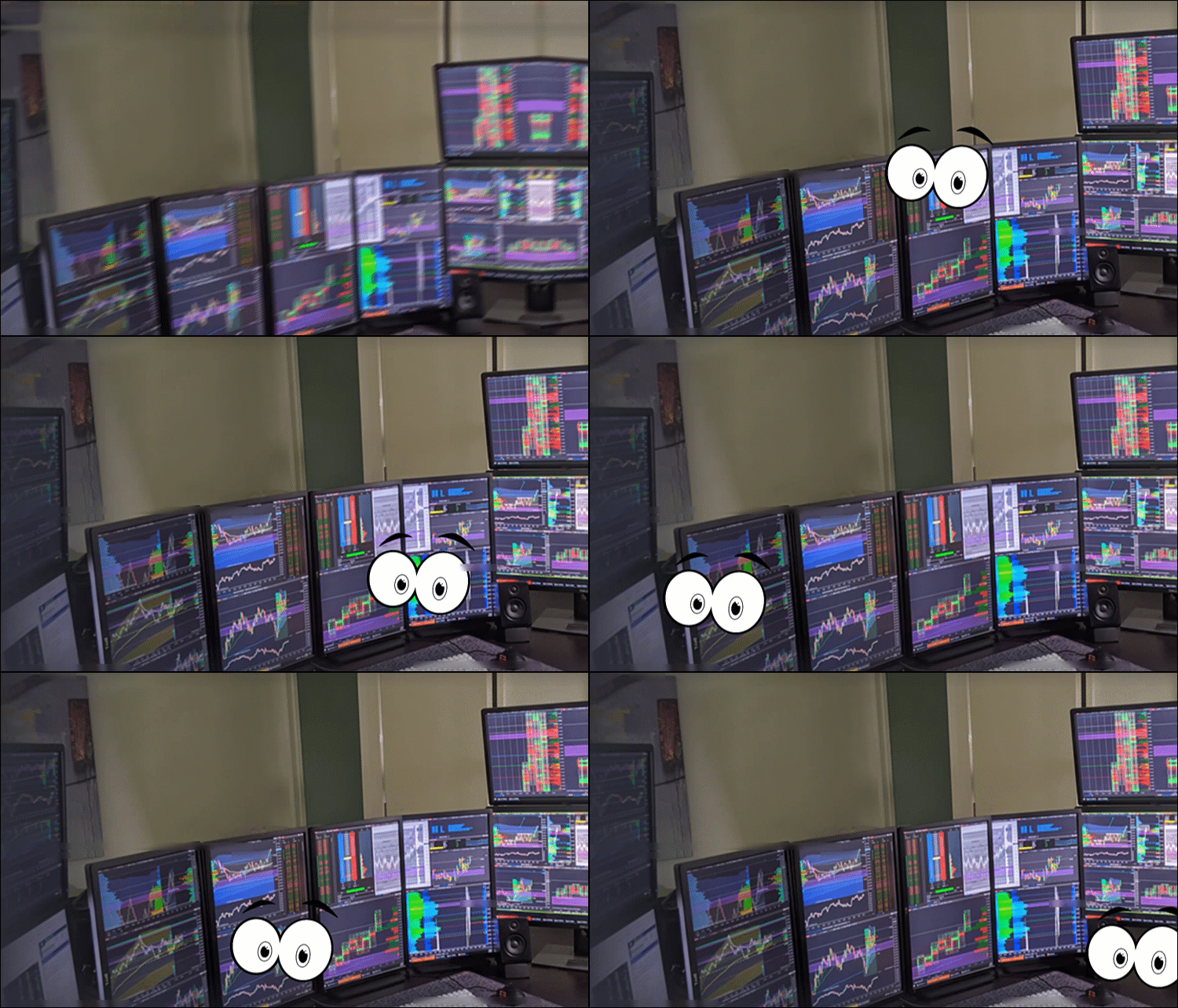
80% of it is feeding me information on a single market.
You might say it's thoroughly comprehensive - even overwhelming. That's actually the point. There's a way around it - you'll see in a moment.
So many traders were hit trying to trade silver, including successful, experienced stock traders. They assumed their methods would also work trading silver. They didn't.
Similarly what's been working for years has suddenly led to traders experiencing the biggest losses of their careers in large-cap tech stocks.
I had a similar experience during the GFC.
For a long career in trading, a method must be armoured-tank robust - keeping you out of those account-destroying trades altogether.
It's all about what you hang onto.
I developed this approach trading at a proprietary futures trading firm. Weaving together many sources of evidence all aligning simultaneously.
Each based on characteristics unique to a specific market - tried and tested over thousands of hours of real-time screen trading to prove themselves as legitimate evidence.
In a moment you can watch me pulling together multiple pieces of evidence in real-time - as I comprehend and trade the market.
Even though it's skill acquired over years and thousands of repetitions, it's private development with other traders that's led to making it as frictionless as I can imagine - compressing the development curve by years.
Now for context - your brain processes colours and shapes 10 times faster than text.
Instead of making notes on charts or in separate planning documents, that intel is communicated via custom-built visual tools that add coloured lines and shapes in place of text - mapping evidence instantly to your workspace and eliminating cognitive load.
This lets you synthesise 10-12 (or more) factors simultaneously, while your competitors are lucky if they can track 3-5. The result is comprehending the market in ways they can't.
This creates an asymmetrical information advantage - identifying trades with such poor odds you avoid them - and when positive expectancy is at its highest, capitalising on it using variable trade sizing.
Trading is all about odds. Thinking in odds is unnatural. This approach does that thinking for you.
The reason this is so effective is that no one can do it instantly.
In fact, it's beyond most people without the language of colours and shapes, custom tools to reduce mental overload, and one other critical component: comprehension and implementation.
Imagine you're familiar with the trading principles and framework I use.
When you watch the footage below, you can see how effective it is to shadow someone who can already do it.
Tap video to watch
If you've been trading for a while, you're under no illusions about how challenging it is.
That's why thorough feedback plays such a crucial role in development. Looking at your trading, I see what you can't, until I point it out to you.
Warning
The fastest way to make this hold up in live markets is to survive then thrive in one market.
It's the quickest way you develop trust and confidence, having completed enough reps proving you can do it.
Once it's the default approach you naturally implement as if it's in your DNA - then explore other markets.
Just don't jump into another market before you've got legitimate points of evidence you can combine. Or you'll end up like everyone who did their nuts trading silver.
On why to trade at all
Trading appeals for different reasons. The challenge. The puzzle-solving. The competition. The autonomy. The self-knowledge that comes from doing something most won't.
For many, it's the game itself - one you can keep playing almost indefinitely.
Whatever draws you to it, the most important thing is approaching it correctly. Not because it's hard - but because getting it right means you don't carry the regret of not having given yourself a legitimate attempt to succeed.