
Trades that fail are inevitable.
But losing is often optional.
Starting with part two of the trading thesis:
If price reaches 0.6538 (asymmetric intel), once business completes, ride the short trade to either the outcome is known or ‘no longer short’ at 0.6499.
The chart below shows entries and exits. Part two of the thesis failed.
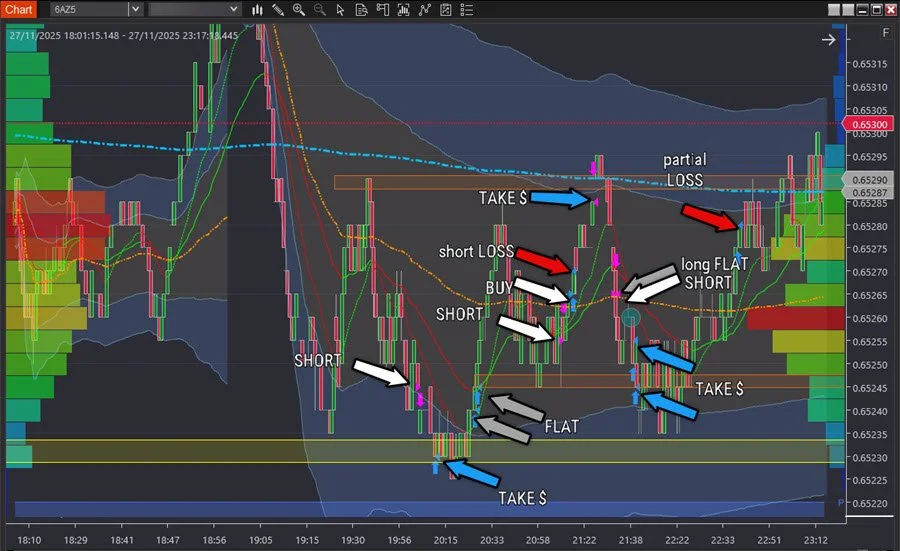
Yet overall, you can see there was no financial loss.
The next chart shows trade entries and exits for part one of the thesis.
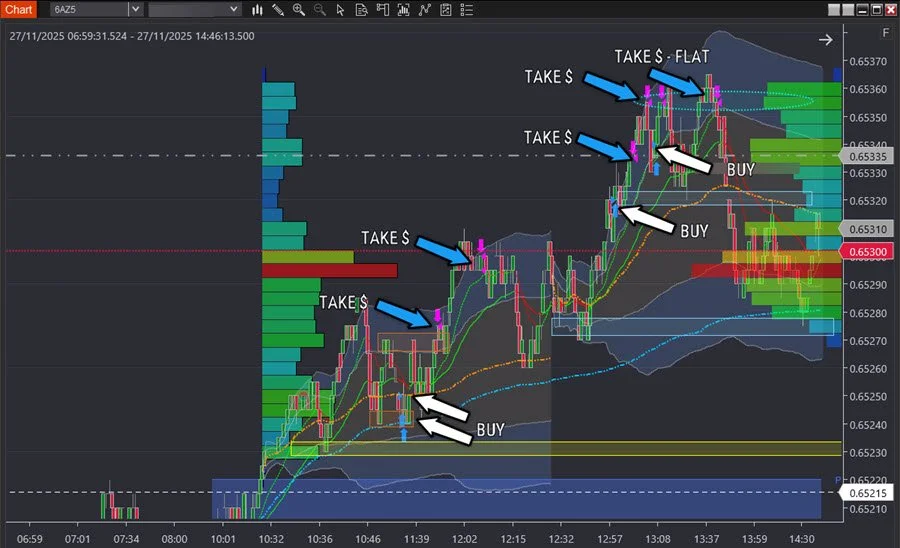
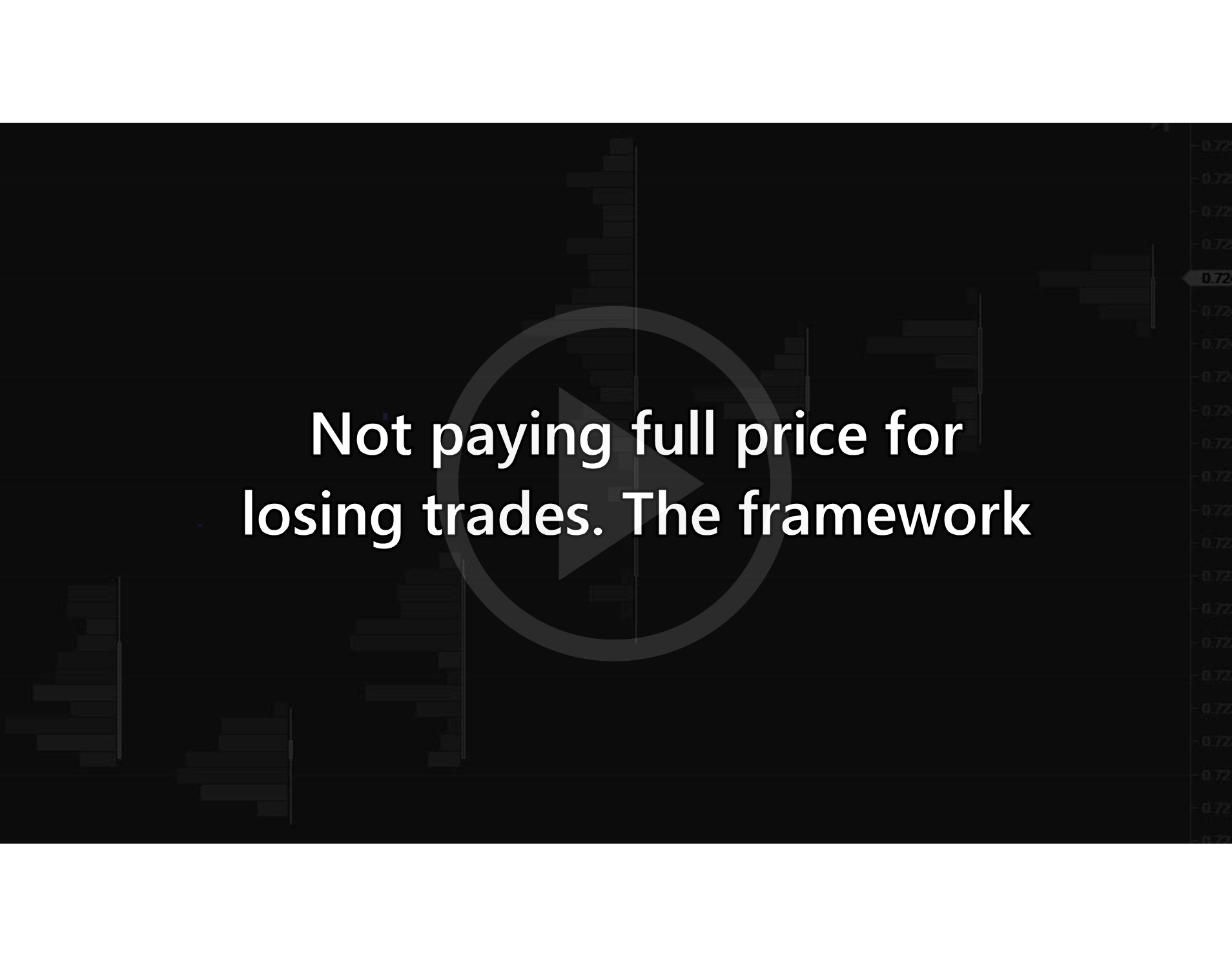
Imagine you'd banked these profits. Then later, wiped them out on one or more losing trades.
Except you don't have to imagine do you. Because you already know what that feels like.
It's exactly why trades that don't take your earlier profits when wrong are so important.
Losing trades are inevitable. But you want to reduce their impact.
And it's not just trades that don't work. You're also going to make mistakes. I do. Some of them cost money.
When you feel beaten up by the market, it's rarely one loss. It's watching your earlier profits disappear. Hurts most when those losses came from a mistake.
Trading isn't a game of perfect. You're never reducing your error rate to zero.
But you've got a much better chance of attaining the intel and skills that keep one bad trade from unravelling your session.
Trading isn't about being right. It's about not paying full price when you're wrong.
The framework and signature trades I use exist to solve exactly this—what to do when the thesis fails.
Without it, the inevitable losses and mistakes compound. All that effort to take money out of the market—only to watch it vanish. Soul-destroying. Account destroying.
Live trading footage. The framework applied