
How to remove on-the-spot trading decisions to avoid the spinning wheel of emotions
The idea of being a trader can seem appealing from the outside, because you're yet to experience the discomfort of being in a trade.
"Have I made the right choice going long, or is it actually a short?"
"I lost on my last two trades. Is that bound to happen again?"
"I didn't take profit early enough last time, but I don't want to take it too soon."
These are just some of the uncomfortable, anxious questions many traders live with. The emotional toll builds until it wears down your resilience, and that's when the trading turns reactive and self-inflicted: seat-of-your-pants trading, too much risk, chasing losses, FOMO, adding to losers.
I'm speaking from personal experience. But we're all human, and we all experience trading in much the same way, unless of course you have an approach that removes the decision-making - and I'm not talking about automated trading.
A sustainable trading business isn't possible if you're riding an emotional rollercoaster every day. My trading on Friday 30 October shows how using a playbook determines what decision to make.
From the open that day, the Asian session (Thursday night in the US) gaps down and continues to sell off.
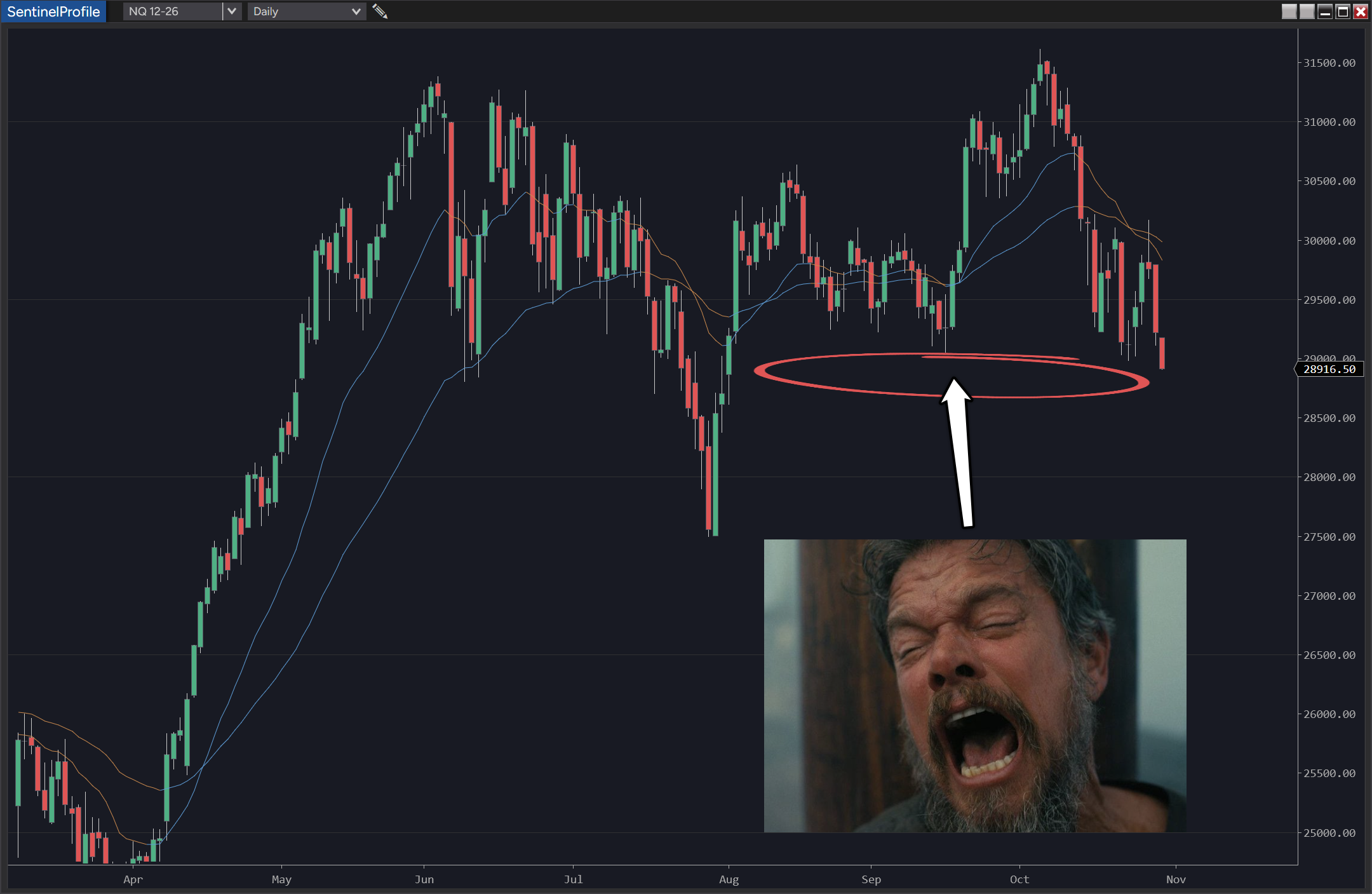
Check out the daily chart I screenshotted before trading. The red circle covers months of stop-loss orders that have been accumulating as long positions build in anticipation of a move higher in the Nasdaq (NQ).
That's a lot of pain waiting to come out as forced exits, and while I don't know if that will happen, at the time of the screenshot the market is behaving like one that's tearing through buyers' stops.
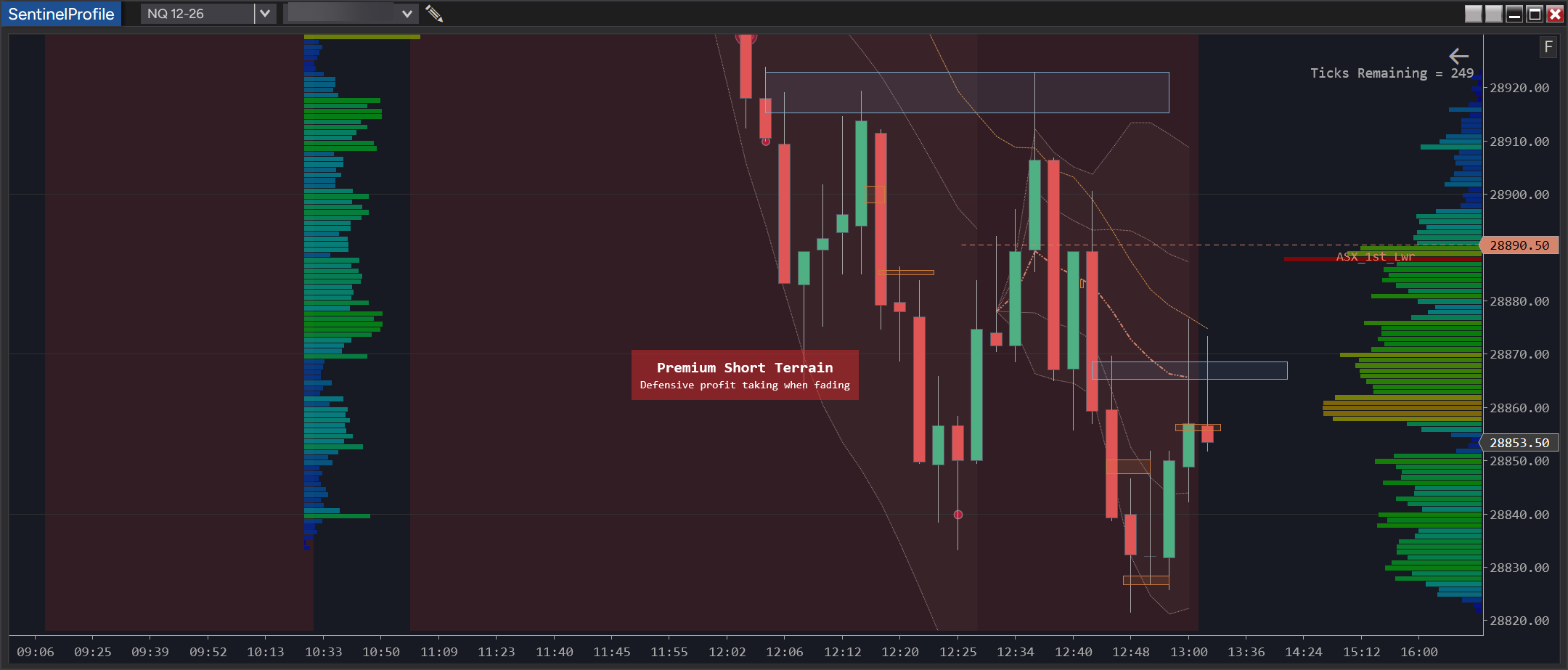
Another of my charts is flashing Premium Short Terrain, which means the price movement is optimum for the short side.
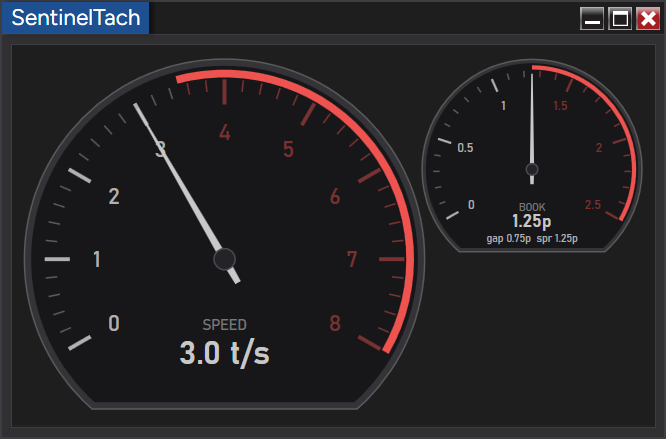
In a strong sell-off, a potential trading obstacle is if price is moving too quickly for you to trade it. But fortunately, price remains within an acceptable pace (for me) which I can check using SentinelTach, a tool I developed specifically to avoid trading during periods you can't keep up with.
While I don't know if we are now in a bear market like so much of the current market 'noise' is saying, I do know that trading during a bear market is not the same as simply trading shorts during a long-term bull market.
Traders simply entering short on pullbacks often find themselves being crushed by aggressive rips to the upside.
For example, three and a half hours into the Asian session, NQ moves up 90 points in 12 minutes.
The 'easy' money has been taken out of the market prior to that move up. Then the conditions get much tougher.
So I'm going to focus on this tougher period. I know what it's like to put up a number of winning trades, only to have the next period of trading change slightly, and before you know it you've wiped out all those profits.
It's frustrating as hell and you tend to be incredibly self-critical in your assessment of what happened. Sound familiar?
So I'm going to share the heuristic to avoid repeatedly wiping out profits.
I learned this from an incredible intraday trader more than 14 years ago now, and it's still the most powerful concept I know to avoid wiping out profits (by continuing to press trades).
This heuristic is to ask: "Is the outcome known?"
What I mean by that is, if everyone who looks at the market comes to the same conclusion, "Wow, NQ has just had a huge sell-off", it's clear to me the outcome is known.
Just prior to the trading you'll see, NQ has already dropped by over 350 points. Clearly the outcome is known, and the market typically enters what's often called a '2-Way Tape'.
This is the most likely next phase, but we've also had a gap down and hard sell-off, and I want to be at the screens should it soon continue.
But in the meantime, if you are going to continue to trade 'when the outcome is known', it's important to be aware your odds of taking money out of the market are lower than 'before the outcome is known'. That calls for a reduction in the size of your trades.
The characteristics of a bear market have been in play all week, so I'm going to cut any short very quickly that has even the slightest hint of ripping aggressively against me.
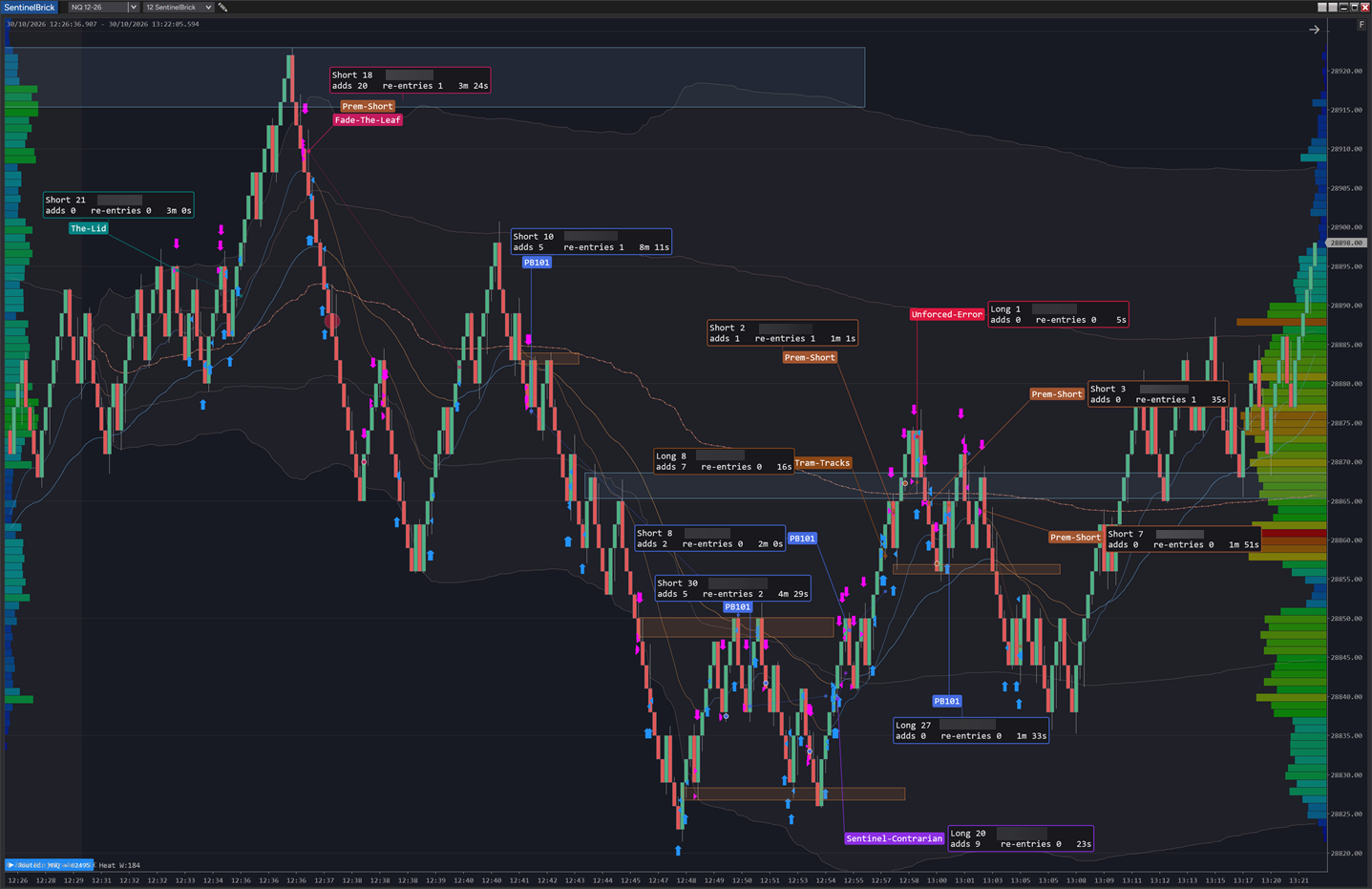
You can see all of the executions (blue and fuchsia triangles) in the screenshot below, all of which are grouped into their respective trade type. So for example, if I enter, add, take some profits, re-enter, take a loss and then finally cover, all of those executions can be part of one trade type.
The chart isn't time-based and the executions were made in the micro contract for NQ - MNQ, and then overlaid onto a chart of NQ. I trade from a DOM and use a variety of charts, so the chart below is just to make it easier to see what happened:
The market moves from one price to another in different ways, and the only way to make sure every trade you make has positive expectancy is to match the trade type to the market's behaviour.
Different names like Fade-The-Leaf, The-Lid, PB101 and Sentinel-Contrarian for example are trades taken because each of them matched the market behaviour at that time. Collectively they make up a trading playbook.
Also, the odds of all these trades vary from one trade to the next. So the size of each trade varies to account for those differences in odds.
Based on all the dynamic sizing the end result was $4.66 won for every dollar lost. If it had been the same size for each trade, that end result would have been just $1.64 won for every dollar lost.
That's no small difference. It's a huge improvement in performance. But if you don't have a playbook of recurring trades, it's not possible to just invent on the spot what difference in size to use.
There's another non-obvious advantage. When you have 'fat' in your profit margin, like 4.66 against 1.64, whenever you make a mistake (we all make mistakes) that fat insulates you against it hurting you.
By contrast, when you have a tiny profit margin, any mistake can adversely affect the overall outcome of your trading session.
But now let's think about the quantity of trades. Grouping the executions, there are 12 trades completed in under an hour. Try doing that when half of these trades are losers and you're going to feel under a lot of pressure. You'll be anxious.
It will be that uncomfortable that there's not only the increased chance of error, but you'll likely not even make that many trades.
Playbook trades are the entire reason I no longer have any of those experiences I raised earlier, and why I can make so many trades and not feel like I've run the equivalent of a 24-hour ultra marathon in my mind.
Trading is meant to be satisfying and mentally challenging. It's not supposed to give you an ulcer. And it doesn't when you can move from one playbook trade to another, because you can see where each one fits into your trading session.