
Your charts can't tell you who's in pain
Anyone familiar with how I trade immediately recognises the trade entries below as playbook trades.
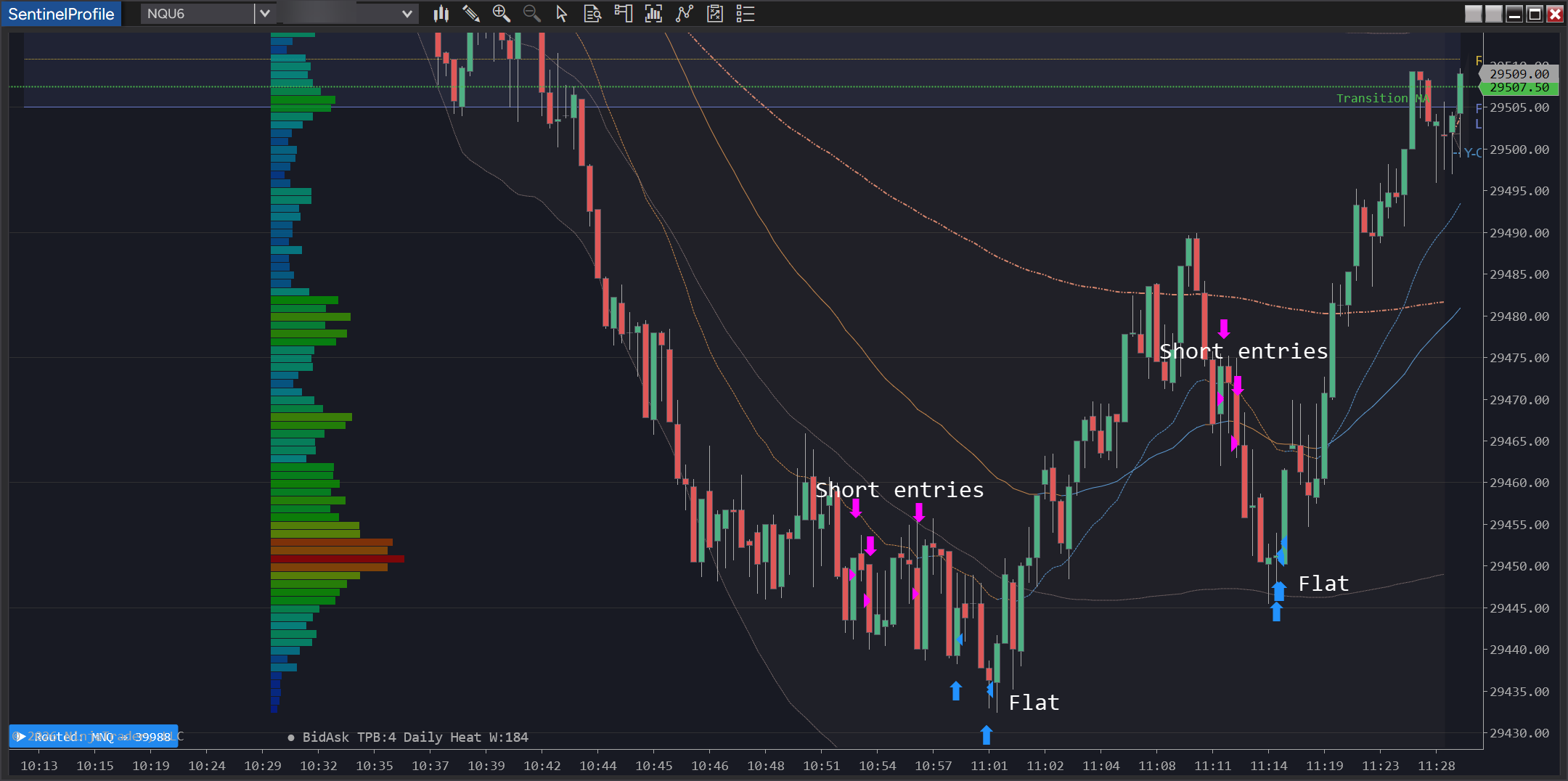
But what about the profit taking (shown as Flat) - what's that about?
Was it pot luck, a fluke maybe? You'll see in a moment.
Included in the twelve questions to ask yourself of every trade is knowing who is in the market and what are they doing there (at those prices).
Therefore the framework I use every day includes knowing positioning likely to impact price movement - which is how I arrived at the following:
When considering the net accumulated positioning since August 14, a notable stand-out is the large group of aggressive sellers, as shown by combining SentinelProfile and SentinelStrata trading tools in the image below.
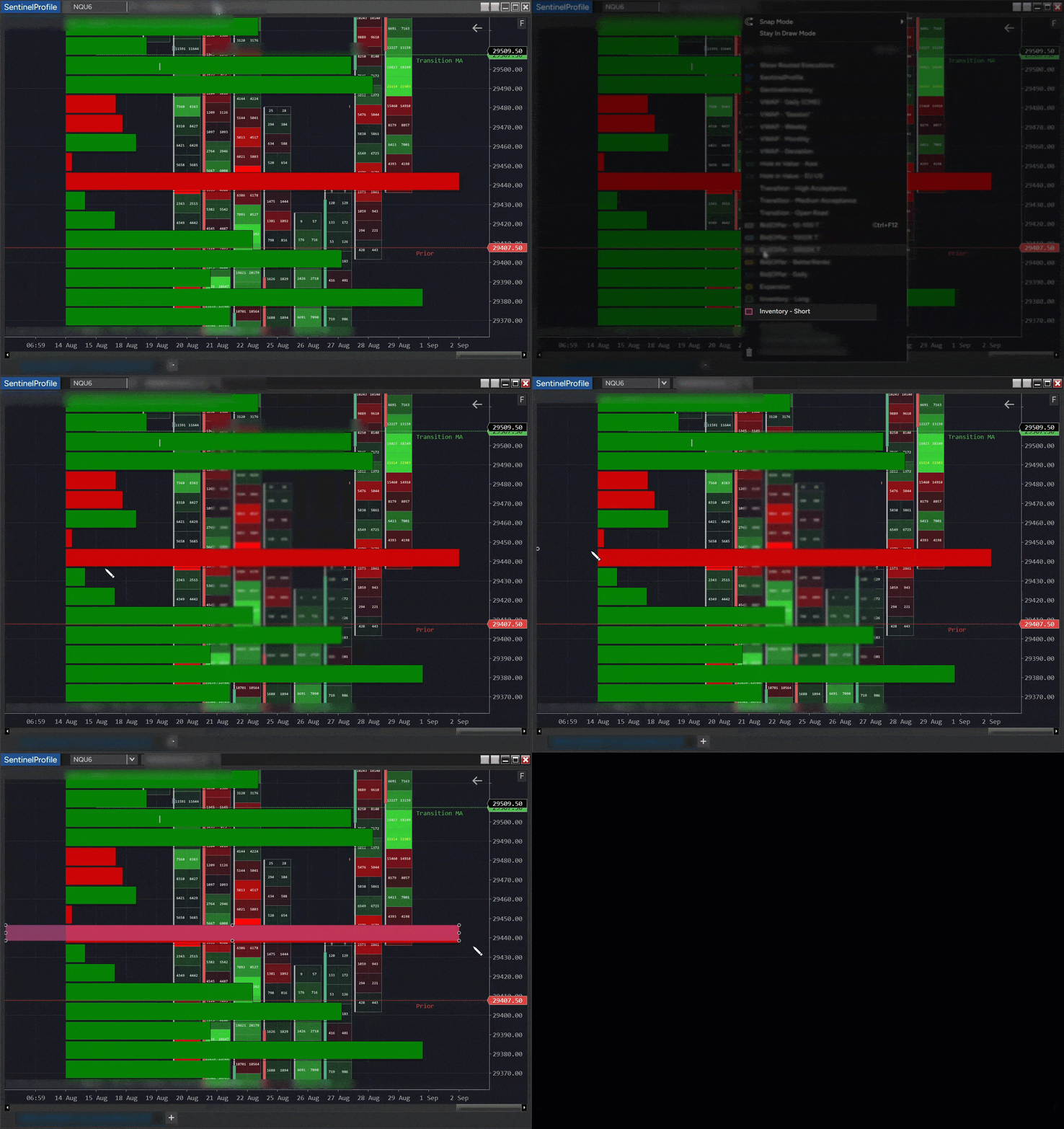
The short position is highlighted using the 'Inventory short' custom drawing tool, which instantly adds it to all of your windows (charts etc) in the workspace.
Looking at the first chart again but with the inventory included, now it's clear what was impacting the decision to exit the shorts. It wasn't a subjective decision, it was 100% objective.
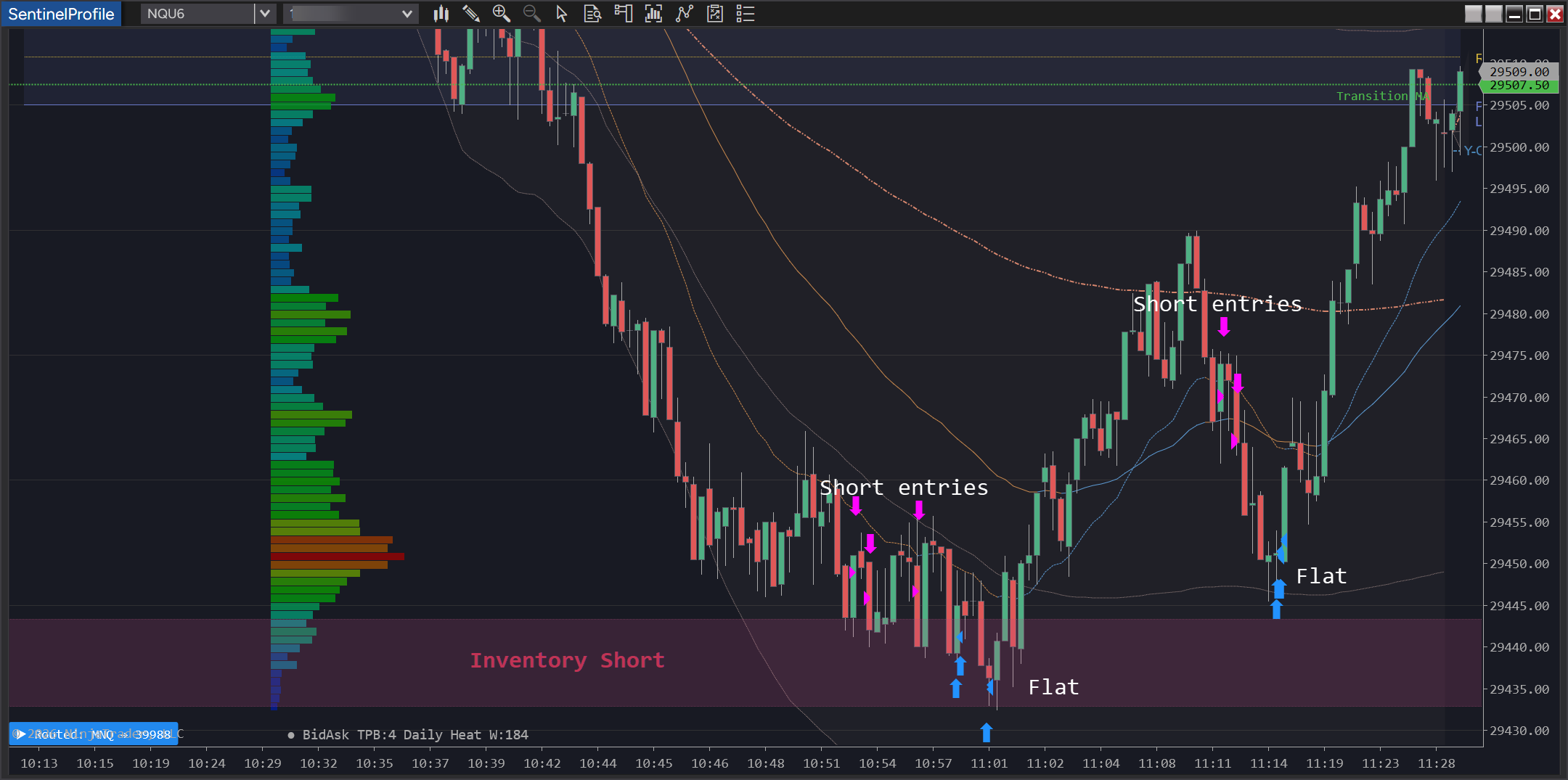
Calculating the net positioning as of Aug 14 is the intel that separates those who understand the market versus those who are simply guessing as to what positioning is relevant - and it's a skill not many traders can replicate.
Add knowing how speculative traders behave and you have another objective reason to take profits at slightly differing prices between the first and second trades.
But if for whatever reason those reasons had slipped your mind, there are other points of evidence supporting the exit in both examples.
The takeaway: the purpose of a framework and trading playbook is to make the decision 100% objective.
Whatever is left to subjective decisions is what leads to emotional reactive actions.
I can tell you those two playbook trades I make over a hundred times every month. It adds up to over a thousand times each year.
When you've done the same thing thousands of times, it becomes muscle memory, deeply learned.
That frees up your mental resources and you can't help but see more of what's occurring that you previously didn't identify.
If I'm co-piloting a live trading session, you can tell me the points of evidence qualifying a playbook trade before you take it, and I can immediately ask "what else?" as I see what you don't see yet.
Co-piloting live trading propels your development - a topic that fascinates me, and the driving force behind every tool I develop and every session I co-pilot in the live market.
The power of a repeatable process and repeatable playbook trades is so underappreciated until you realise trading is a competitive performance endeavour. The only way you can compete, therefore, is by doing something other traders can't.
What is lost on developing traders is that 'being consistent' in a repeatable trading approach is only the beginning.
You can't help but get better and better the more you do it and the more experience you gain.
And I don't care who you are, it's easy to love something you're good at. And you only tend to love it more the better you get.
What about another example of knowing the behaviour of other participants.
Notice 'Prior' and 'Trap' on the chart below.
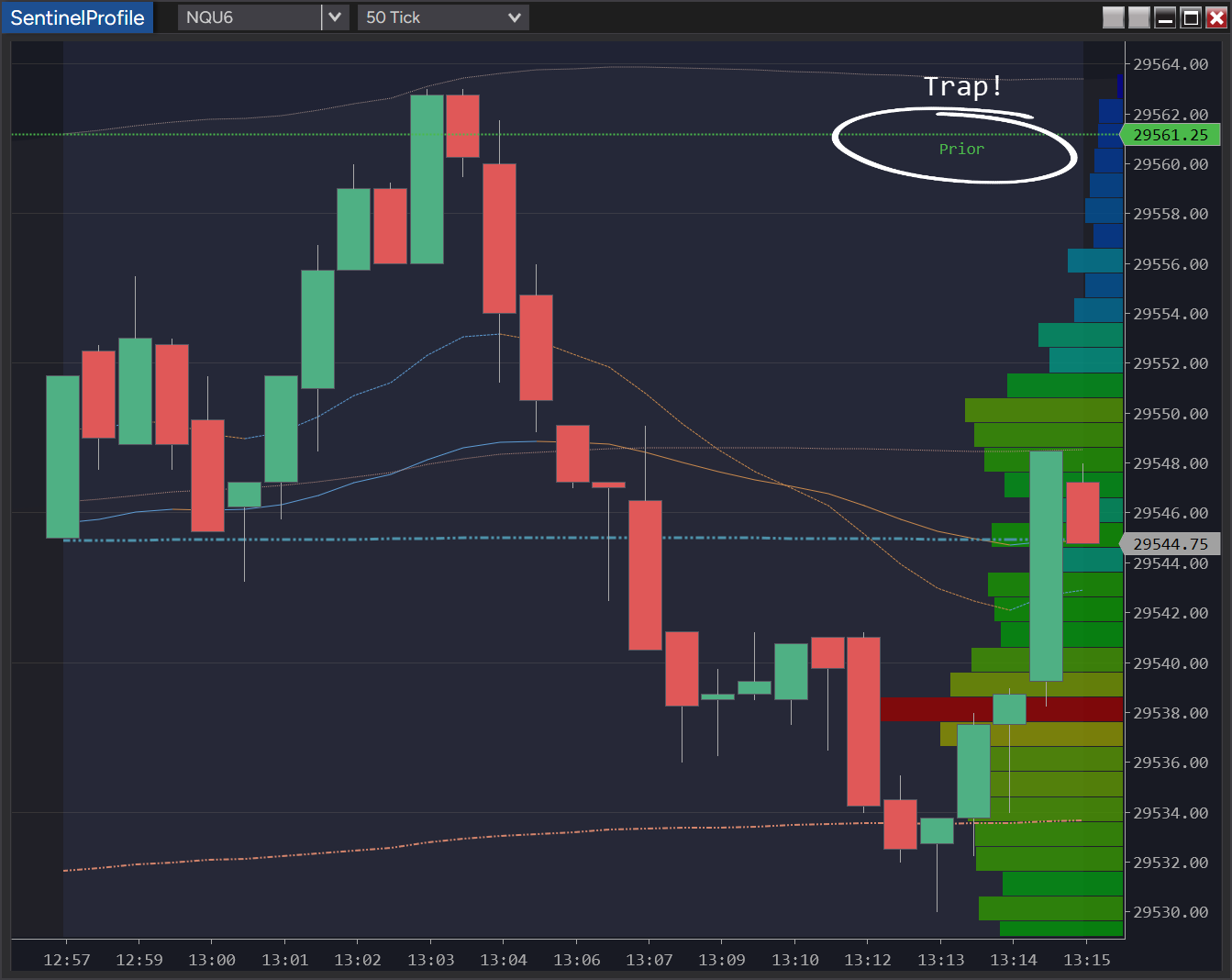
This price was flagged during game planning as a potential trap.
It's at a price I anticipate larger participants will sell the market and force longs out.
Again, the focus is on what other traders will do at certain prices but top picking is fraught with danger.
Knowing it might be a trap for longs isn't enough on its own to enter short at this level - not with the move still running against you.
But it's no good waiting for the market to sell off and then entering into a short trade. That reduces your chances of the trade going your way immediately so you can limit your downside to a small paper cut.
It would also mean entering at such a poor price you'd need a wide stop. A wide stop means sizing the trade down massively, and all of a sudden what could be a great paying trade is turned into a mediocre payout.
What you want to do instead is enter with size but do so extremely early so it reduces your chances of a meaningful loss. Yet it still gives you the chance of a meaningful payout, because the trade is a sufficiently large move in price.
Even better is if you can put enough size on you can quickly scalp some small profits to give yourself a 'free hit'.
What I mean by this is if you've taken some money out of the market, then the worst outcome from here on will be the rest exits break even or minor draw - the initial scalp profit being the cushion.
So how do you do it?
In the SentinelLiquidity screenshot you can see iceberg sell orders occurring at the 'prior' level I'm anticipating large sellers to enter.
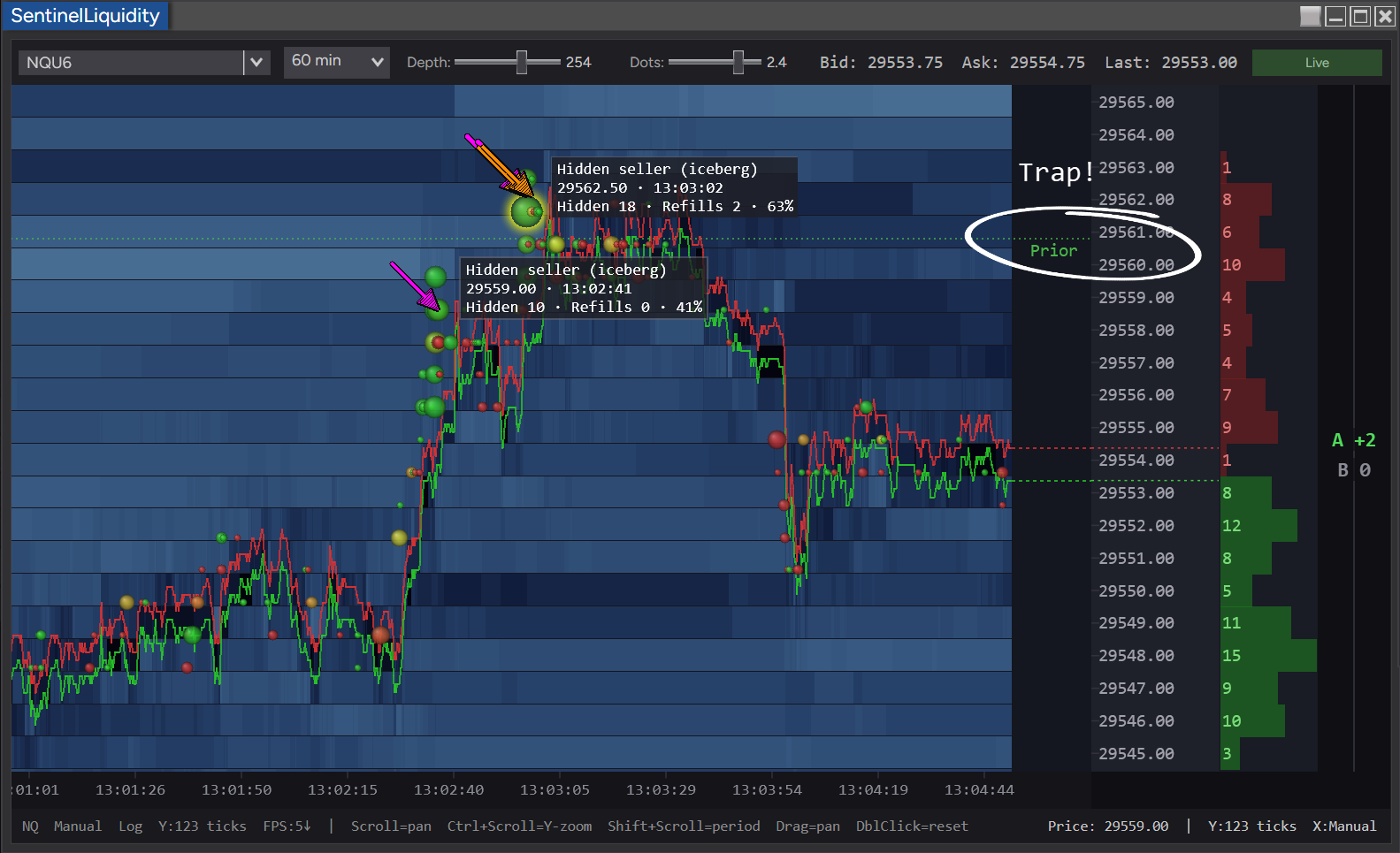
This is the proof you need to enter. But not only that, there's still time to enter before the move down occurs.
Even if the trade fails, when so much selling comes into the market 9 out of ten times price will move down just enough to create a small cushion you can 'lean' on to avoid suffering a loss if price continues on to the upside.
You don't have to be watching this window 'waiting' for an iceberg order. I'll hear a cue through my speakers (I don't like trading with headphones on). It's not a blaring alarm. It's literally a pleasant-sounding voice simply stating 'NQ Iceberg'.
When you consider what senses you have available, why only rely on what you see? Sound reaches you faster than sight, by a few dozen milliseconds. But that's not the real reason it works.
The real reason is if you're not watching the window, or windows, where this information is displayed, you'll simply miss it, but you'll hear it either way.
That audio alarm sounding gives you enough time to enter early, as shown below.
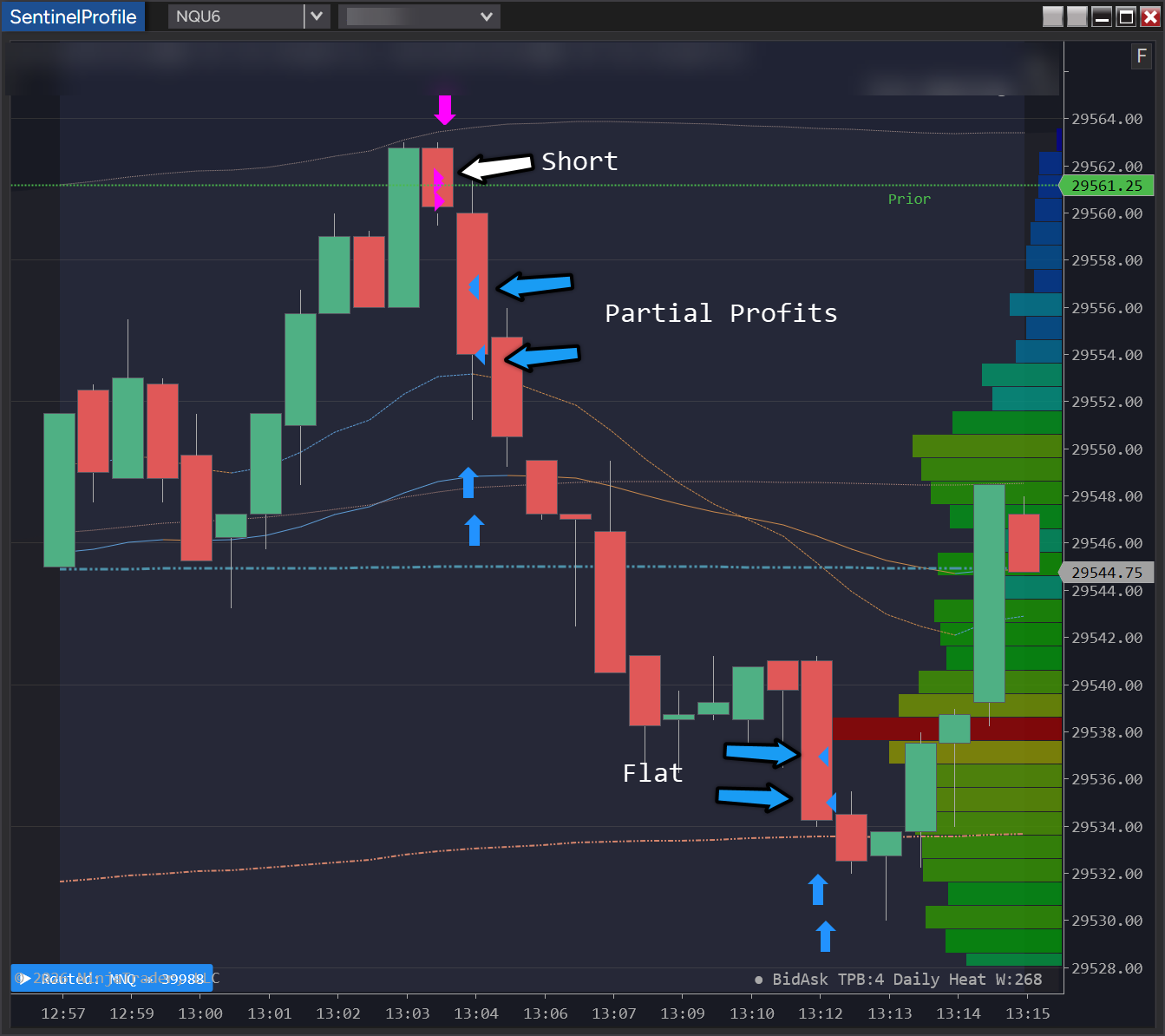
What looks like magic, luck, or voodoo from the outside simply comes down to knowing the game, having resources to inform you what's happening in the market beyond what charts can tell you and finally the skill to act on it.
One without the others isn't enough. Every trader who is consistently profitable paid a price to have all three and that's fair. Losing because you're none the wiser is optional.