
The Most Valuable Commodity I Know
"The most valuable commodity I know of is information. Wouldn't you agree?" Gordon Gekko, Wall Street
True then and still true today. It's always true.
But it's only of value if it's information the majority don't have. It's why what the industry keeps selling fails you. It has no competitive advantage - you feel it every time you pay for it.
Below is more than a price chart. First, notice the 'Hole in Value'. Right now, all you need to know is the odds of price filling the hole are very high. High enough that I watched a trader hit his first 7-figure year trading almost exclusively this scenario back in 2019.
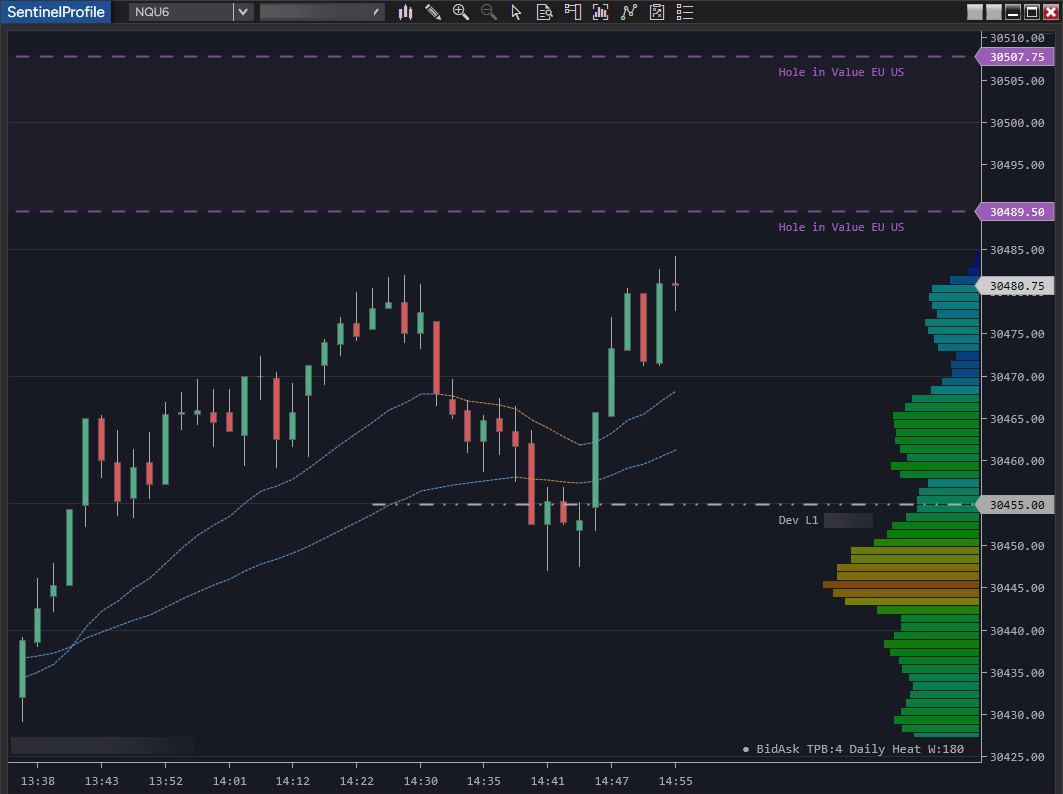
As this plays out, you'll see a resolution to friction every trader encounters - even when you have access to the information. More on that in a moment.
Price has now traded 'in the hole'. But the white circled area in the chart below shows it's not yet filled.
At this point, what do you imagine other traders in the market are doing?
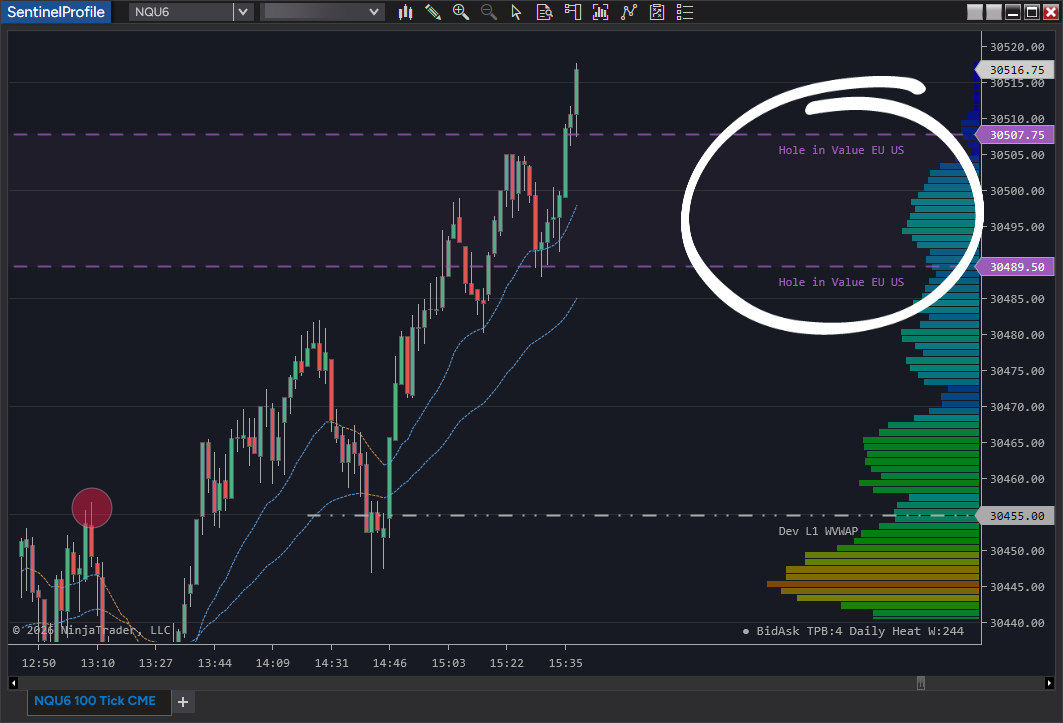
What happened to those traders buying a strong move up, who don't know about filling the hole? Look below - it's obvious. They puked.
But that's not the whole story. What do you imagine those traders do next?
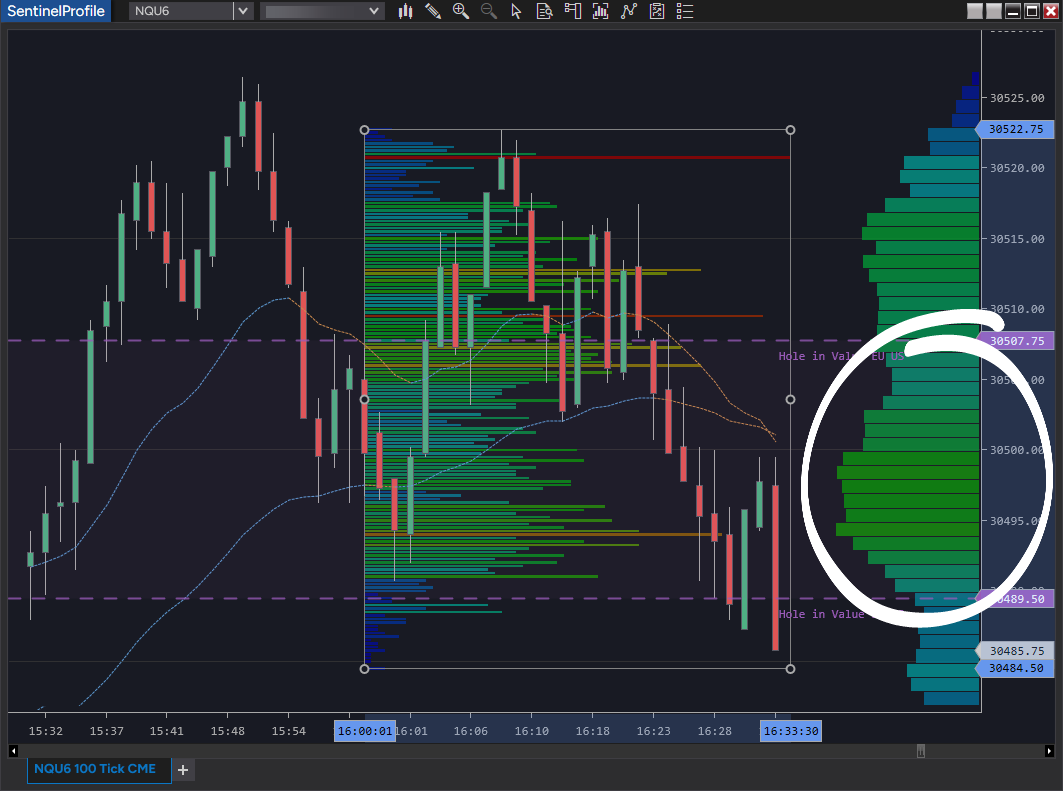
The hole has finally filled - you can see it in the white circle above.
I've added a SentinelProfile drawing tool to the chart, starting at the opening of Europe to the current time. It shows an even distribution of trading volume across that period.
But I have a thesis - short traders have entered at the new lows. But have they?
Friction-free is a moat
Even if you have all the information, how quickly can you find the missing piece?
How many times have you been in front of the screens, scrambling to decide what to do? You know how it feels when you're rushed, and it overwhelms your decision-making.
You either miss the move or you make an absolute meal of it.
In the rush there wasn't time to factor in the risk. Now you're managing a loser that's getting away from you, all because of friction.
The following information is available to anyone. But the tools don't let you make quick changes on the fly.
Just lots of friggin' around with different settings, and people simply can't be bothered with it.
It's why I invested the dollars and time in developing a suite of tools to reduce that friction. As you'll see, friction-free is a real edge.
I know which key to press on the keyboard to instantly switch to the information I need to prove the thesis.
The delta-only and delta-only zoomed-in views below confirm a skew to urgent selling.
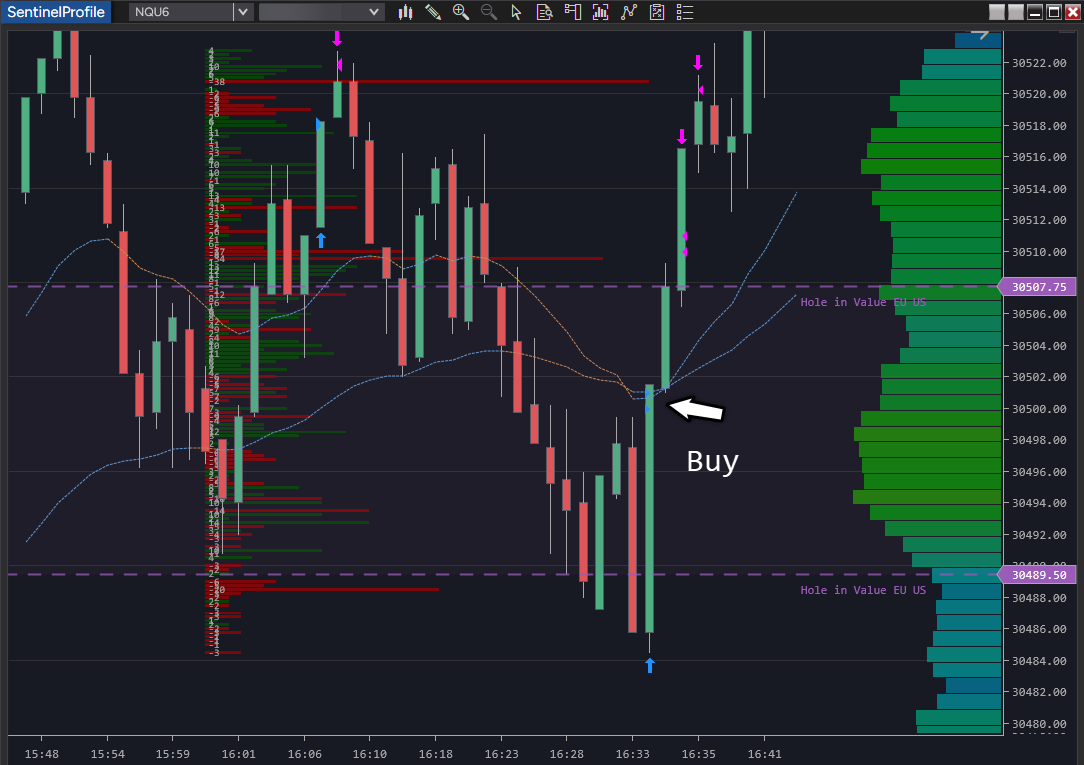
Zooming in, you see sellers hitting bids all the way down.
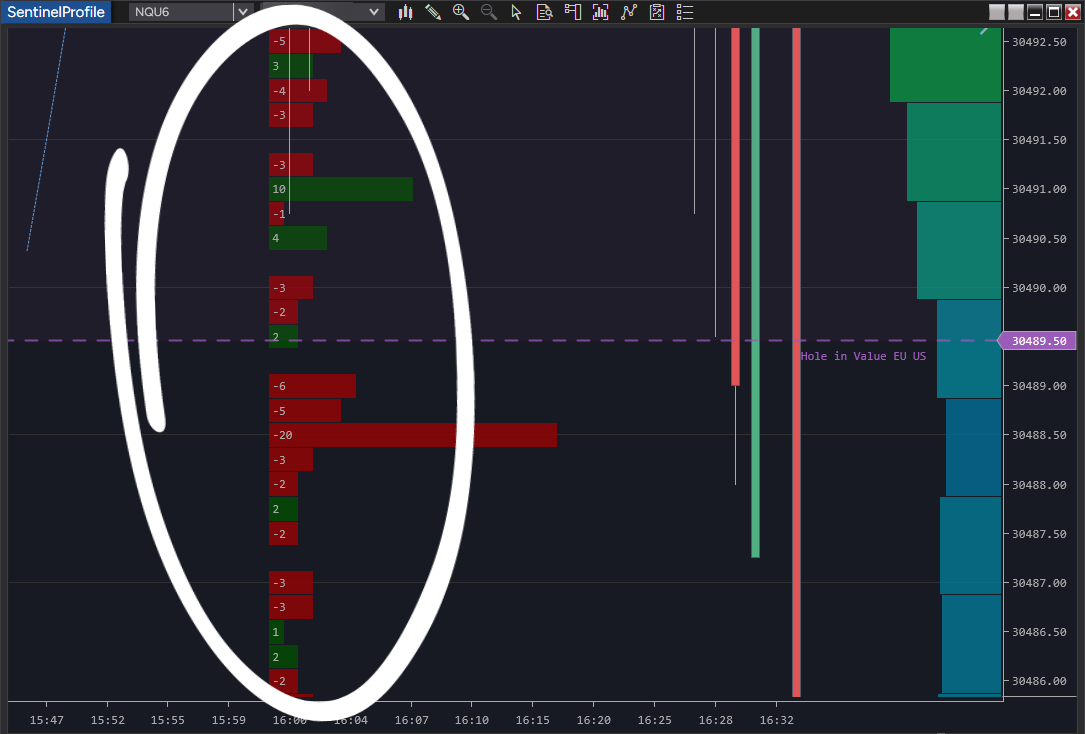
Right at the edge of the hole, you have traders who don't know their actions will hurt them. And it's your job to take the other side of them.
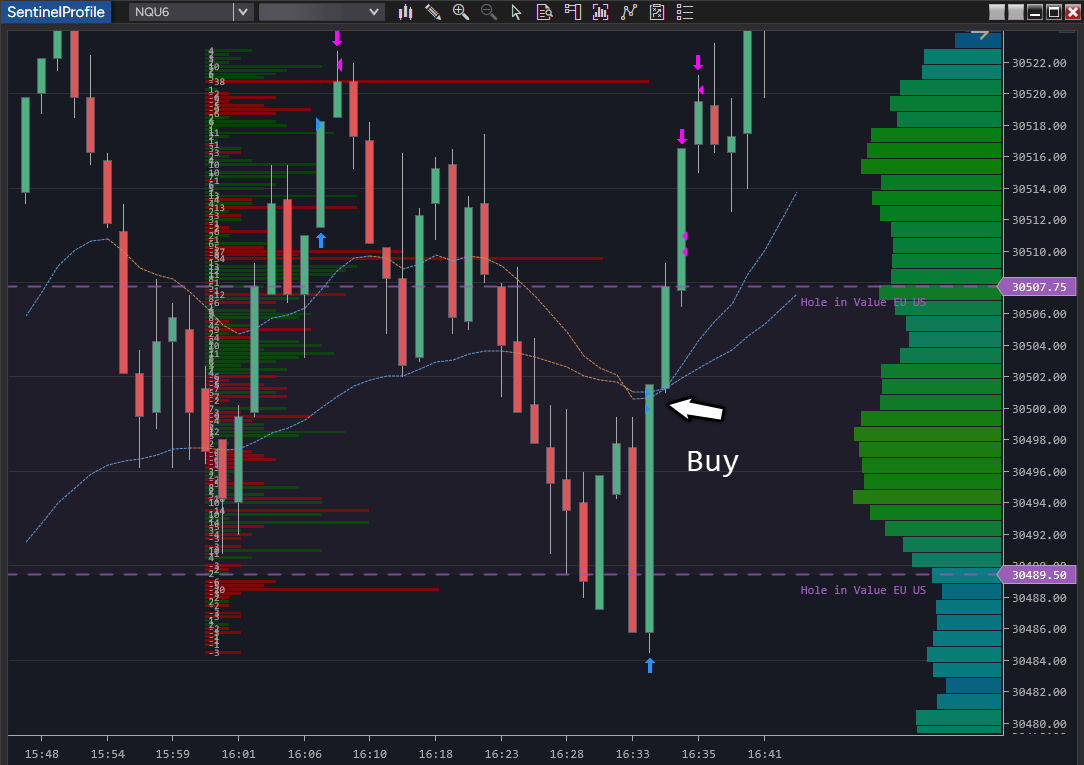
That's the game when you can see what others can't - and act before they know what hit them.
The trading scenario (filling the hole in value) is from the trading framework, and the behaviour is aligned with a trade from the playbook.
Sticking to the same framework and playbook of trades you know stand up in live markets creates unconscious learning.
No mental contortions under time pressure legitimately remove decision-making friction.
The most consistent performers in any field do the same things over and over. Trading is no different. All that repetition builds muscle memory - and you can do more of it without it feeling mentally draining.
That means your mental juice is aimed at identifying the traders who'll get caught, not 'where do I exit? Should I take partial profits?' and so on. Different game to most. Different outcome.
Everyone sees the same price. Not everyone sees the real story.
What's been covered is exactly what we imagined trading should look like and feel like.