Did you lose your last trade to game theory?
Game theory isn't another way to approach trading. It is trading.
Consistently profitable trading depends on how you respond to what other traders do. That's really it.
More bluntly:
"You trade against the people who are stupid, and you get out of the way or follow the people who are smart."
Lihong Wang trades semiconductor options at IMC, one of the world's largest options market makers.
"A lot of game theory is very technical, but it really can be reduced to one thing: play weaker players. Don't get into the ring with Mike Tyson."
Alix Pasquet: Managing Partner & portfolio manager of Prime Macaya Capital Management.
You don't make money trading. You take it from those who make bad trades. And you keep losing it when you make bad trades.
It's best conveyed using real trading examples.
I'll start with a simple bad trade to spot from Thursday.
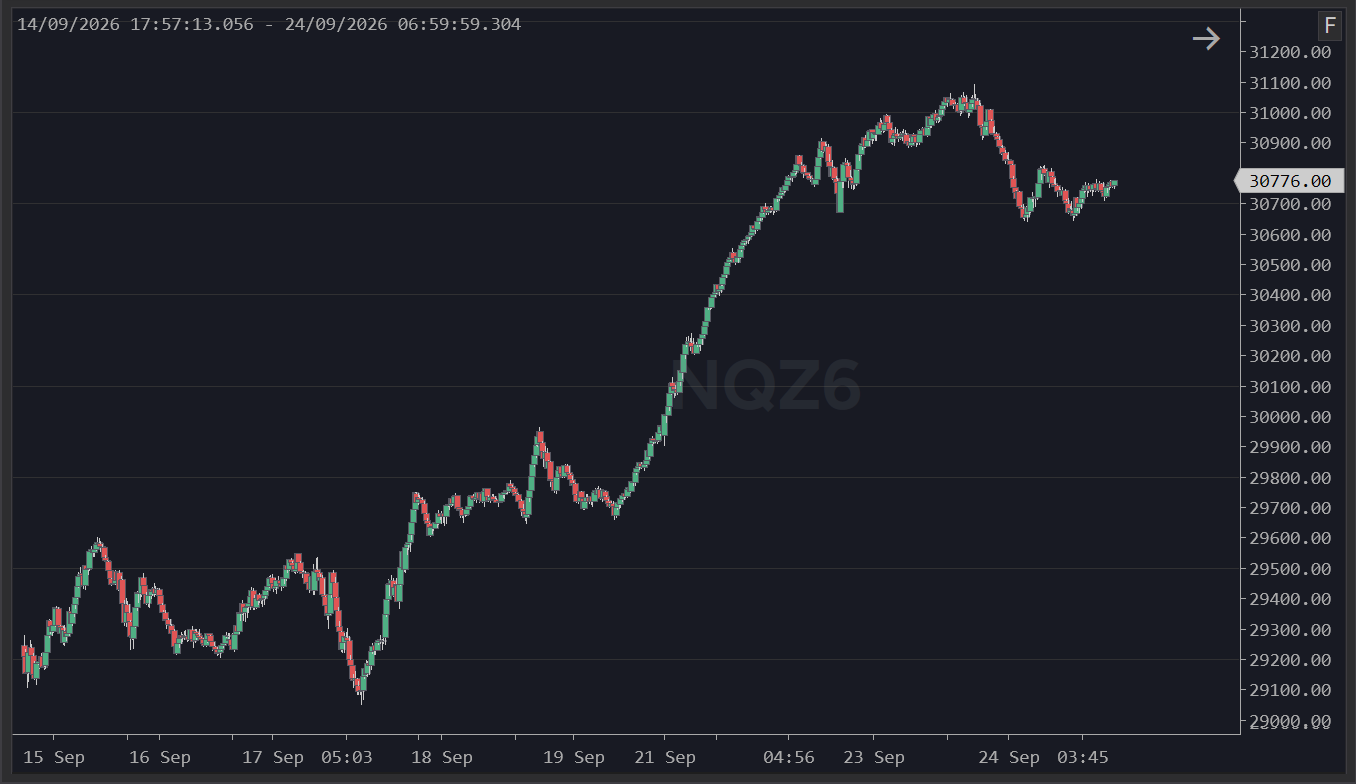
Nasdaq futures (NQ) are trading up for the week, and at the time of this trade, the market looked like the chart below. Traders are looking for the right moment to go long.
The Hong Kong stock market was trading at the time. That session's volume-weighted average price (VWAP) showed an attractive entry opportunity.
Two standard deviations below its VWAP is anchoring price to the upside. See the white arrows in the chart below.
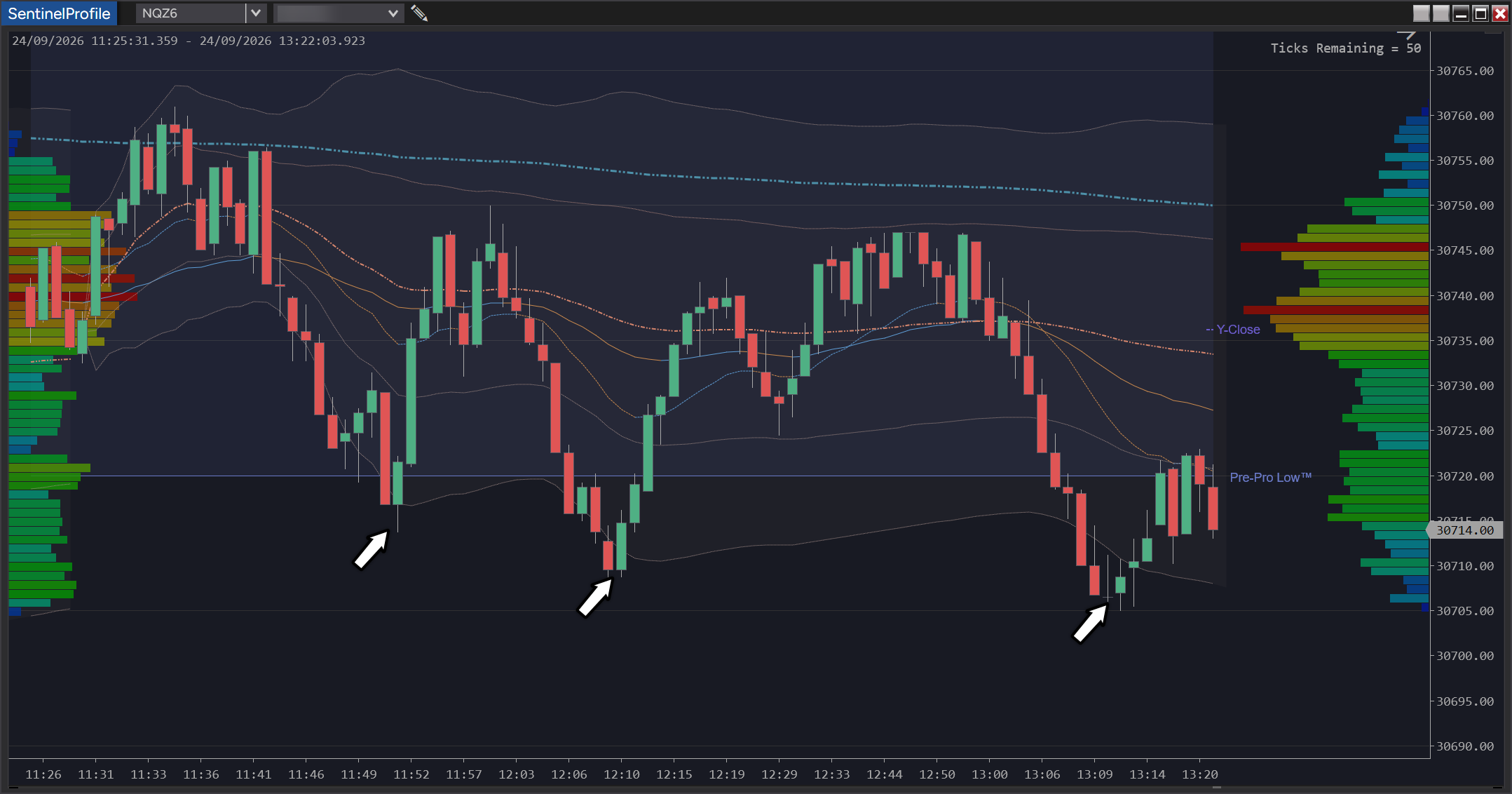
Each time price reverses in the direction of the 'big picture' view (first chart), buying just a few NQ contracts pays you USD 1,500 in under two minutes. Appealing, isn't it?
Each time price puts on a reasonable rally, you can see how traders will think that's a great way to take some quick profits and let the balance run with no risk. A free trade, if you like. All seems quite reasonable, doesn't it?
I can hear other traders saying:
"I'll get long a handful, take off some for quick profits and let the rest run."
Time ticks over, and look at the market in the snapshot below:
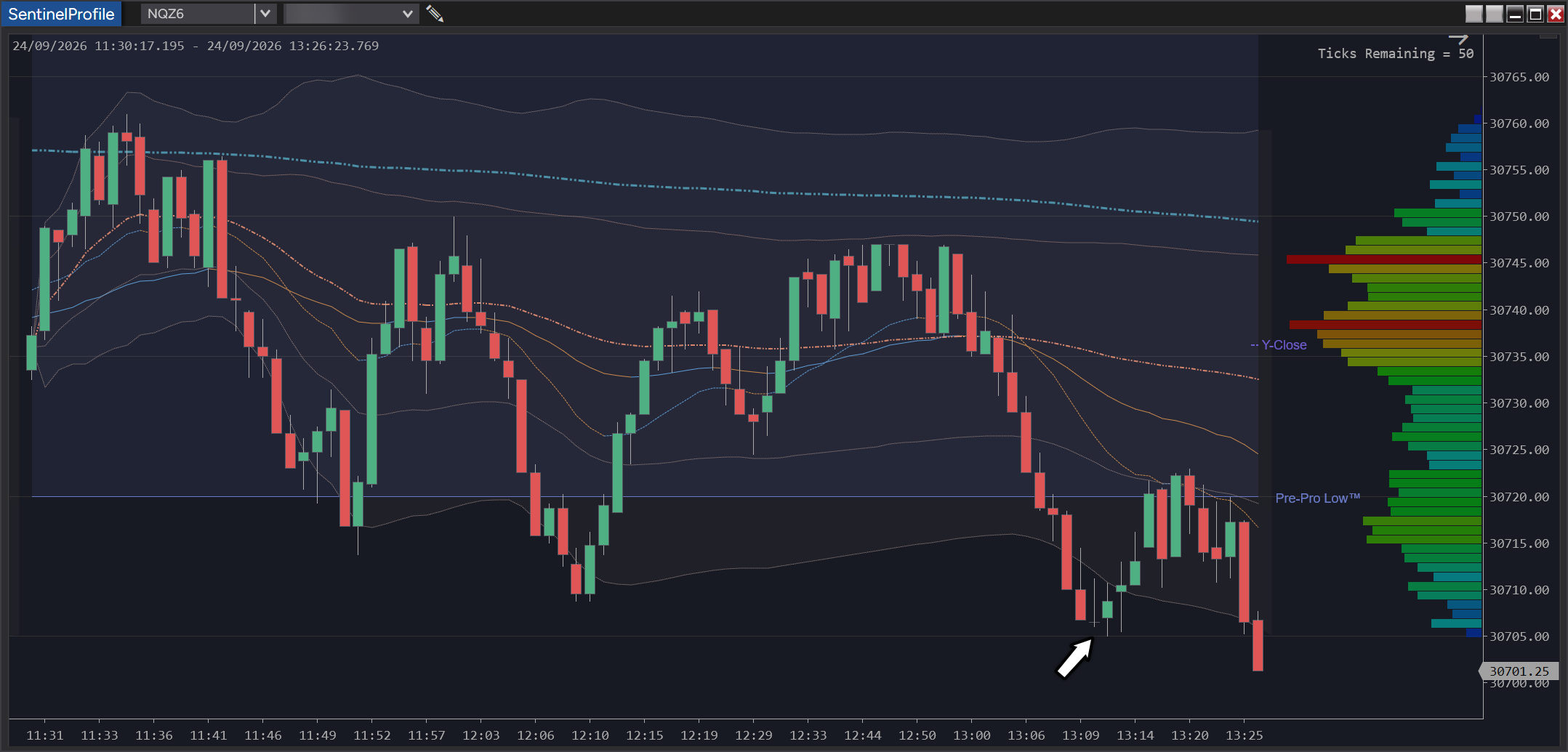
That last anchor didn't put in the same-sized move. Recent buyers are now offside. Price didn't give them a chance to take some off. Hold that thought.
Moments later, another anchor looks to have formed (see below).
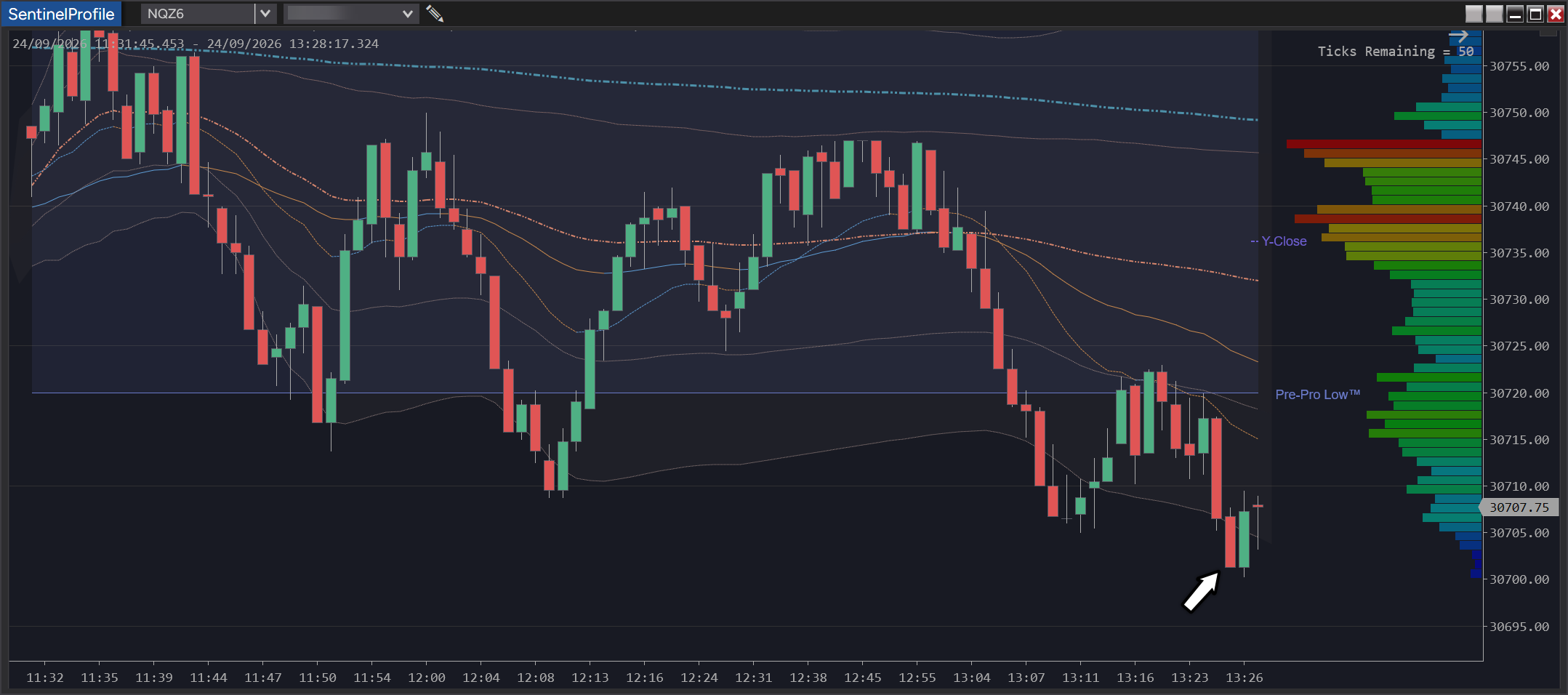
What would you do right now?
"Here comes the push-back-up - I'll just buy some more."
And with the right tools, you can see that flurry of buying activity.
The catch is those anchors have failed the last two days.
Without going into why, those anchors become meaningless relative to where we are in the month.
But even if you're not aware of this phenomenon, another phenomenon is three-day themes. And today is the third day of a theme that attentive traders know about.
This sets up the short opportunity because the actual theme that's in play is based on a different VWAP calculation.
In the chart below, you can see the short entry is made when price is still within that calculation's bands.
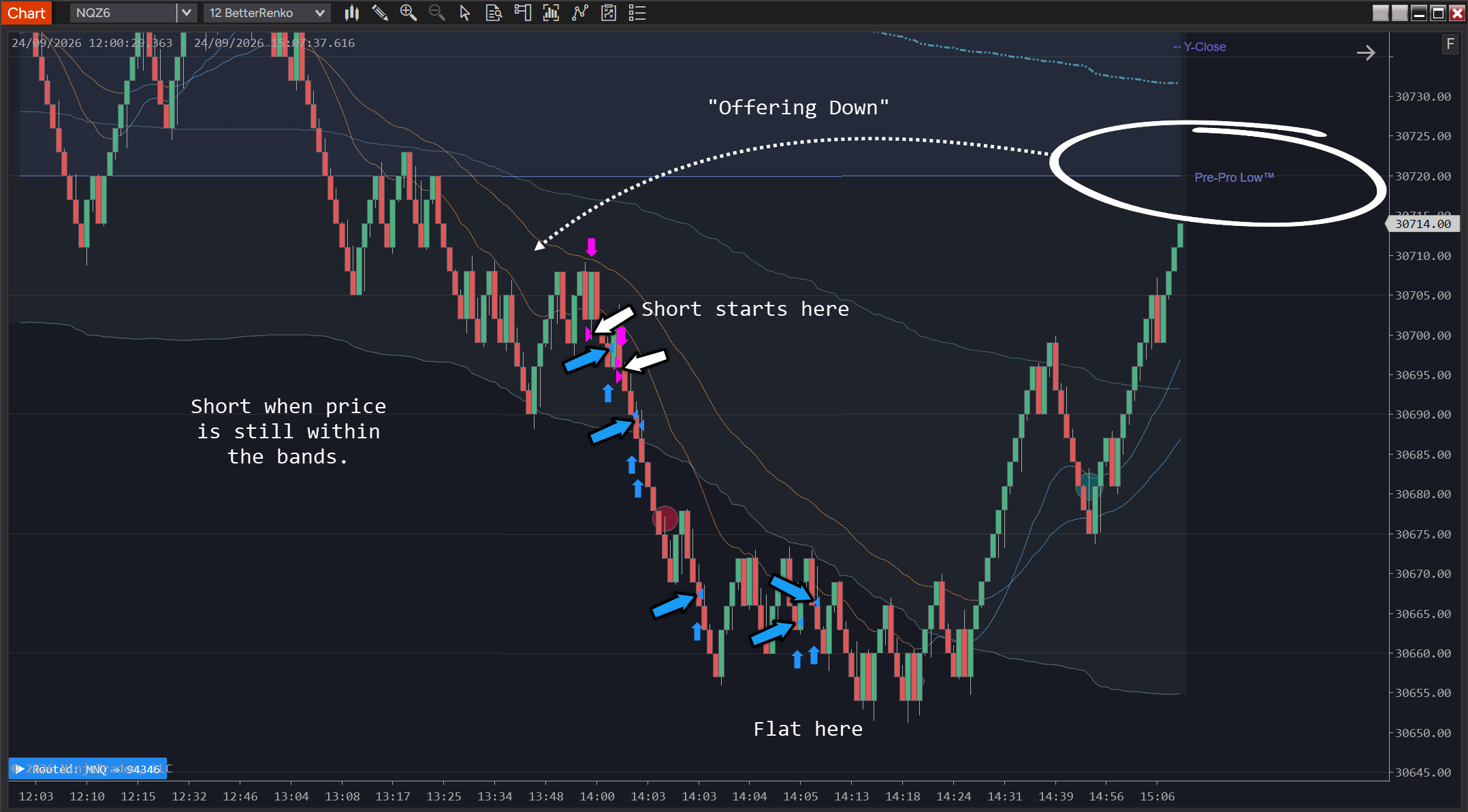
The short trade above also happens to be the 'Playbook101' playbook trade, which showed up at the same time as one of my rules of thumb - you are looking to take a short when offering down below the Pre-Pro-Low™ shows up. (Offering down shown in image above).
Knowing a bad trade is one thing. Having a system wrap around it that takes money out of the market repeatedly without getting fleeced yourself is another thing entirely.
Everyone has heard another trader say, "I knew it was going to do that", yet you know they lost money trying to monetise it.
You might find this ironic, but it took me way longer to develop a framework and a catalogue of signature trades to consistently turn other people's bad trades into lucrative opportunities than it did to know and spot bad trades.
Next trade same day.
I referenced the Pre-Pro-Low™ in the trade above. The foundation of everything I do is knowing what other traders don't. Not all other traders, but enough for you to repeatedly take money out of the market.
Because I have been doing this for over twenty years, that intel has grown. One such example is incorporated into tools I developed called SentinelGamma. Its relevance is as follows:
The Invesco QQQ Trust ETF (QQQ) trades about 35-45 million shares per day. It tracks the same index NQ futures track. At its current price, it trades an average of USD 30 billion per day in notional value. That makes it one of the world's most heavily traded ETFs.
Due to its size, it has a rich options market, and options dealers hedge what they sell. Gamma is how quickly an option's sensitivity to price changes changes as the underlying (in this case QQQ) moves.
Options with strike prices away from the underlying's current price are less sensitive, and options with strike prices close to the underlying are more sensitive. As QQQ moves up or down, what was insensitive can turn sensitive and vice versa.
But QQQ only trades during the US stock market hours. NQ futures trade 23 hours each day. So if the index via NQ moves during the overnight session (Asia and Europe), the 'now' most sensitive option strike prices are estimated and converted to a price in NQ so dealers can hedge by trading NQ futures when QQQ isn't trading.
In the chart below, I have circled what is, at the time, an estimated 'Call Wall', a price where dealers will trade to hedge their options exposure.
You only need the adjusted NQ price for the most sensitive option strike price to know where option sellers will actively trade NQ to hedge their exposure.
You can see the price can't break through it, hence the term 'wall'.
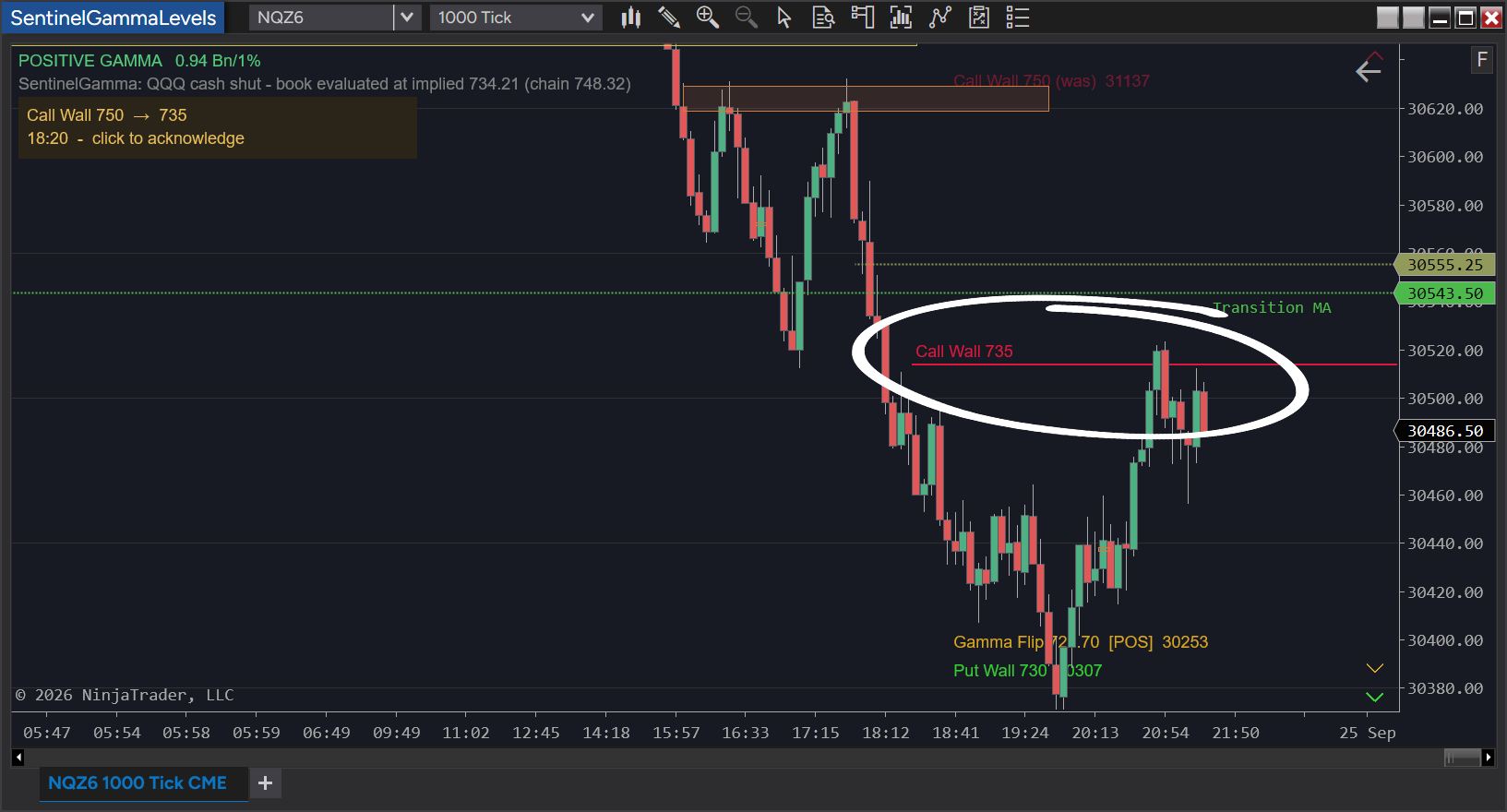
Traders unaware of the above only see a sharp reversal to the upside followed by a 'dip' to enter long.
That's the bad trade.
The market responds like the Predictable Efficiency playbook trade, where 90% of the time the market moves far enough in your direction to remove risk completely.
My approach is to enter a larger-sized trade and quickly take some profits on the very first price push in my direction. This way I bank a generous payout simply because of the trade size.
I couldn't do this using the usual tools within trading platforms. Instead, I've invested in developing a range of custom tools to facilitate actively 'massaging' a trade. That's why you see many buys and sells in the execution view below.
It's my approach, not the only approach. It's more important to know when and where bad trading will occur.
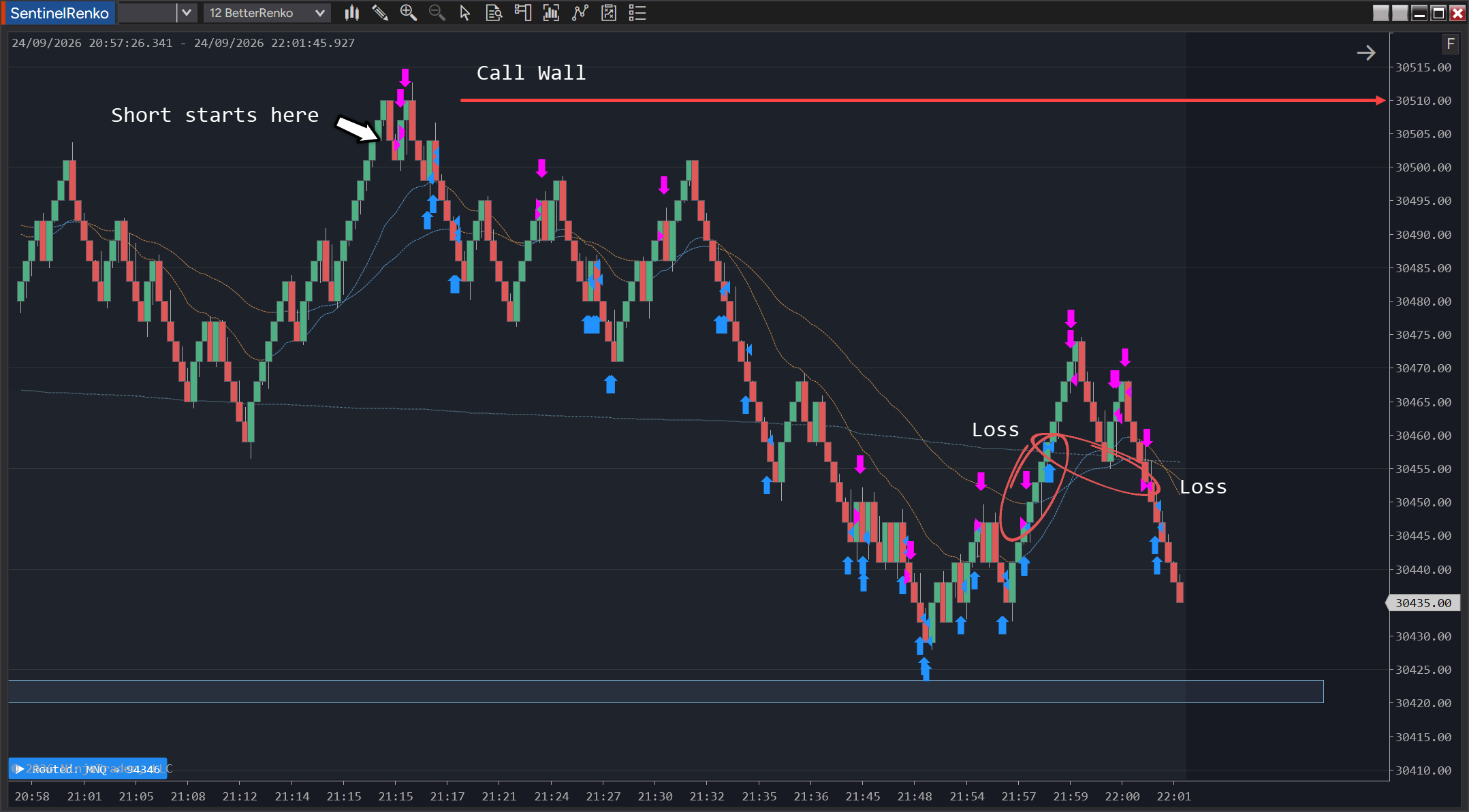
The next example is less frequent.
This time the trade opportunity occurs during the 'open road' environment. While market edges tend to be relatively small, the irregularity and open road combined increase the odds. The improved odds support 'putting your foot down' size-wise.
Once you escape inner-city traffic, travelling along motorways and roads that go for miles without any sign of traffic lights, T-junctions, etc., the road in front of you is uninterrupted.
It's also how price behaves in the open road trading environment. It becomes the perfect storm for traders to discover the one time adding to losing trades blows your account.
The open road price behaviour exists because even though NQ revisits past price levels, the valuations that determined those past prices no longer apply.
However, traders insist on trading the past and build their long and short positions based on where they worked previously, from an 'acceptance' perspective (think market and volume profile concepts).
Seeing this, other traders, also unaware that past acceptance won't hold 'today', blindly use outdated acceptance to enter trades 'now'.
Because it's complete nonsense, once enough traders have committed to the short side - Friday's 'bad' trade - the market rips higher, moving about 100 points in about half an hour.
When price moves so quickly, offside traders often freeze like a deer in the headlights because they've been caught by surprise.
By the time they realise they need to act, the loss is typically larger than they thought possible.
While feeling the stress of seeing a loss ballooning, adding to a loser is more palatable than crystallising a loss far larger than they ever thought likely.
Like traffic lights are absent on the motorway, sufficient liquidity to absorb all the short trade 'stop-loss' orders is absent.
The market moves through prices like a hot knife through butter to find liquidity to fill a barrage of stop-loss orders - including those who've added and added before being automatically liquidated due to margin constraints.
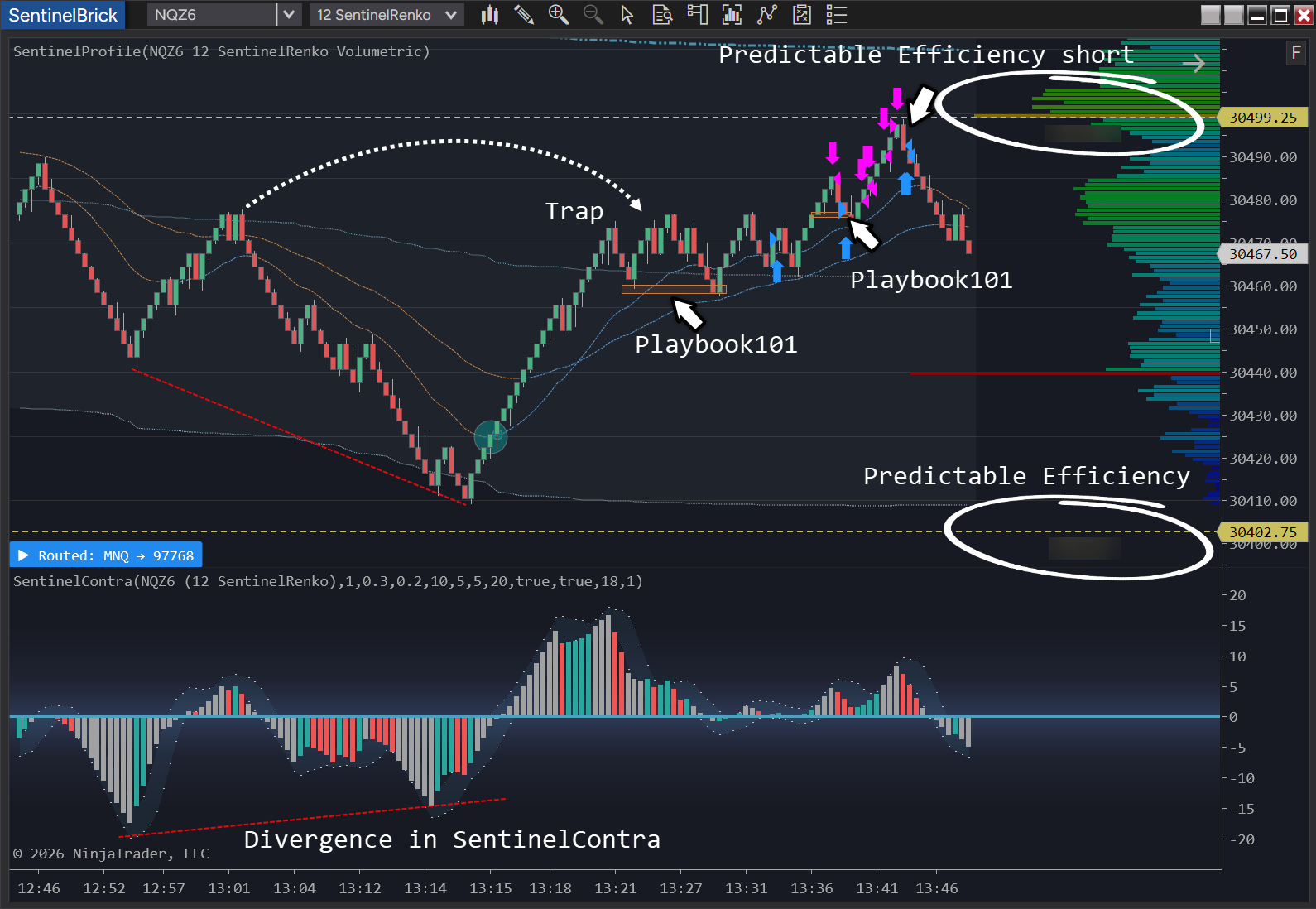
You know what it feels like to be caught by surprise. The trades above are a snapshot of how unaware traders get caught making bad trades.
When you know how to spot them and can wrap a repeatable framework around them, the trades that used to catch you out are the ones you're now on the other side of.